
She has the laptop open, but she is not really looking at the screen anymore.
Her notebook is beside her, filled with numbers: website renewal, packaging costs, inventory, supplies, product labels, childcare materials, salon equipment, vendor fees, permits, marketing, delivery bags, pop-up booth fees, and the one tool she knows would help her serve more customers faster.
She has already checked her bank balance twice. She has opened three tabs that say “business funding,” but every path seems to lead her back to the same place: apply for a loan, accept a credit check, agree to monthly payments, pay interest, or use a credit card and hope the business grows fast enough to keep up.
She is not lazy. She is not confused about the value of her business.
She is not afraid of working hard. She is simply tired of being told that the only way to grow is to owe someone money before the business has steady revenue.
She wants breathing room, not another bill. She wants to buy the equipment, finish the website, restock inventory, improve packaging, or market her services without feeling like every sale must immediately go toward repayment.
This is why so many women are searching for Texas business grants for women. They are not looking for magic money. They are looking for funding that does not create more pressure than progress.
They want to know whether there are small business grants for women in Texas, startup grants for women in Texas, grants for women-owned businesses, and other forms of business funding without loans that can help them build with more stability.
The honest answer is this: grants and non-loan funding can be powerful, but they are not automatic. They usually require preparation, clear business positioning, eligibility, documentation, and a strong explanation of how the money will help the business grow.
A grant is not just money given because someone needs help. Most funders want to see purpose, readiness, demand, impact, and a realistic plan.
That means women entrepreneurs in Texas must learn how funding really works before the opportunity opens, not after the deadline is already close.
This guide will help you understand where non-loan funding can come from, why grants are competitive, what funders usually look for, how women-owned businesses often get overlooked even when funding exists, and how to build a smarter no-loan funding strategy for your Texas business.
Why Many Texas Women Entrepreneurs Want Grants Instead of Loans
Many women entrepreneurs in Texas do not reject loans because they lack ambition.
They reject loans because the timing does not make sense for their business stage.
A loan can be useful for an established business with steady income, strong records, predictable sales, and a clear repayment plan.
But for a woman who is still building her customer base, testing a product, growing from home, managing family responsibilities, recovering financially, or running a business with uneven monthly sales, loan repayment can become heavy very quickly.
The pressure of owing money every month can force a founder to make rushed decisions instead of strategic ones.
This is especially true for early-stage women entrepreneurs, side-hustle founders, single mothers, women rebuilding after financial setbacks, women with limited credit history, immigrant women entrepreneurs, minority women business owners, and women who started with personal savings.
Many of these women are already carrying risk. They may be paying for supplies out of their paycheck, using their home kitchen, taking client calls after work, selling at local markets on weekends, or growing slowly because they do not want to depend on credit cards. For them, business funding for women entrepreneurs must do more than provide money. It must create space to grow without adding fear.
A woman who needs $5,000 for equipment may not want a loan because the equipment will help her produce more, but she may need a few months before that investment turns into steady revenue.
A home-based baker may need packaging, permits, food safety training, and marketing support before she can sell at larger events.
A beauty business owner may want to add a second chair, upgrade tools, or rent a small suite, but her monthly income may still rise and fall based on bookings.
A childcare business owner may need supplies, furniture, safety materials, and local support, but may not be ready to take on debt while serving families who need affordable care.
A product-based founder may need inventory, labels, and shipping materials, but she may not want to use credit cards before she knows which products sell fastest.
This is where grants, pitch competitions, accelerator stipends, corporate grant programs, city small business programs, county economic development support, and nonprofit-backed entrepreneurship programs can offer a different path.
These funding sources are not always called “grants,” but many of them can provide non-repayable support, cash awards, training, technical assistance, equipment support, business coaching, or access to networks.
For a Texas woman entrepreneur who does not want repayment pressure, these opportunities can be more aligned with how she wants to grow.
Still, it is important to be realistic. Texas business grants for women are usually competitive. A funder may receive hundreds or thousands of applications. S
ome grants are only for businesses in certain cities.
Some are only for certain industries. Some are only for businesses that have been operating for a minimum period.
Some require proof of revenue. Some focus on job creation, community impact, innovation, disaster recovery, rural business growth, childcare access, food systems, technology, or economic mobility.
This means the strongest applicants are not always the women with the most emotional stories.
They are often the women who can clearly explain what they do, who they serve, what they need, how much they need, how the money will be used, and what will change because of the funding.
That is why women who want business grants instead of loans need to stop thinking only in terms of “Where can I get money?” and start thinking in terms of “How do I make my business ready for the right funding?”
Join Opportunities for Women Founding Membership
If you are tired of searching for grants, scholarships, business funding, fellowships, and growth opportunities on your own, the Opportunities for Women Founding Membership was created to help you move with more clarity, strategy, and confidence.
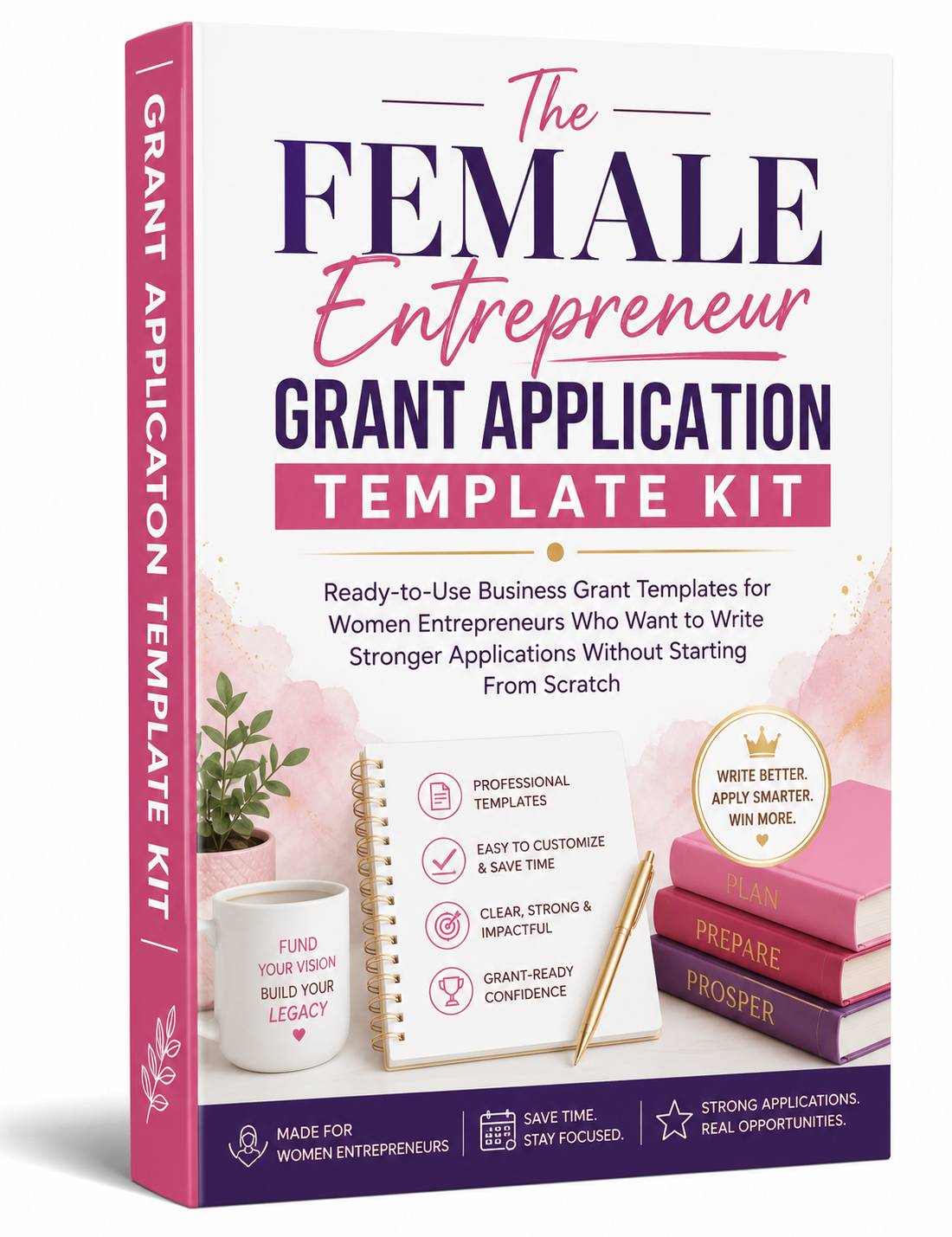
As a Founding Member, you get access to monthly coaching, templates, toolkits, curated opportunities, and practical guidance to help you find better opportunities, prepare stronger applications, and stop approaching funding with guesswork.
Join Opportunities for Women Founding Membership today and start building your opportunity strategy with support.
Where Texas Women Can Look for Business Grants and Non-Loan Funding
Women looking for small business grants for women in Texas need to understand that funding rarely comes from one perfect source. There is usually no single grant that solves every business need.
A smarter approach is to build a funding map. A funding map is a list of places your business can search regularly based on your city, county, industry, business stage, founder identity, customer base, and growth goals. Instead of randomly searching online when money gets tight, you create a system for finding opportunities before they close.
City small business grant programs are one place to begin. In Texas, women in Houston, Dallas, Austin, San Antonio, Fort Worth, El Paso, Arlington, Plano, and smaller communities should regularly check city economic development pages, small business support offices, local recovery programs, and entrepreneur assistance announcements.
City programs may support storefront improvements, business recovery, commercial district growth, local hiring, downtown revitalization, minority-owned businesses, or small business expansion. These programs may open for a short period, which is why waiting until you urgently need money can cause you to miss the deadline.
County economic development programs can also matter. Some counties support businesses that create jobs, serve local communities, strengthen rural economies, improve access to services, or support targeted industries.
A woman-owned childcare business, food business, agriculture-related business, mobile service business, or community-based business may find opportunities through county-level programs, especially when the business aligns with local needs.
The key is to search beyond the word “grant.” Sometimes the opportunity may be called a small business assistance program, recovery fund, entrepreneur support program, business improvement program, innovation challenge, or local incentive.
Women’s business centers and small business support organizations are also important. These organizations may not always give direct grants, but they can connect women entrepreneurs to training, mentors, application support, business planning tools, pitch opportunities, and local funding alerts. For many women, this kind of support can be the difference between submitting a rushed application and submitting a strong one.
A founder who receives help clarifying her business model, budget, customer base, and growth plan is more prepared when a grant opens.
Local chambers of commerce can also help women find business funding. Some chambers offer pitch events, local business awards, networking opportunities, sponsor connections, vendor opportunities, and visibility that can lead to support.
Community development financial institutions may also offer training, technical assistance, credit-building support, and sometimes grant-related programs. While some CDFIs are known for loans, women who do not want loans should still check whether they offer grants, business coaching, financial education, or non-loan technical assistance programs.
Corporate grant programs are another source of business funding for women entrepreneurs. Large companies, brands, banks, technology companies, beauty companies, retail platforms, and business service providers sometimes offer grant programs for women-owned businesses, minority entrepreneurs, product founders, food entrepreneurs, creative businesses, tech startups, or community-focused businesses.
These programs can be very competitive because they often accept applicants from across the country. However, they can be useful for Texas women who have a clear story, strong brand presence, customer proof, and a specific funding goal.
Pitch competitions, accelerators, and incubator programs are also worth watching.
A pitch competition may award cash, business services, mentorship, or investor exposure.
An accelerator may provide training, funding, workspace, coaching, and connections. University innovation hubs may support technology, research-based businesses, student founders, community innovation, or startup development.
Nonprofit entrepreneurship programs may support women who are launching businesses to increase income, support families, create jobs, or build community solutions.
Industry-specific opportunities can also matter. A woman in food may need grants for kitchen equipment, packaging, food safety, local food systems, or farmers market growth.
A childcare founder may look for early childhood business support, supplies, facility improvement, or workforce-related programs.
A woman in agriculture may search for rural development, specialty crops, conservation, or farm business support.
A beauty entrepreneur may look for corporate grants, local startup awards, supplier partnerships, or small business competitions.
A wellness founder may search for community health, women’s wellbeing, or local business support.
A retail founder may look for storefront improvement, e-commerce growth, or downtown business programs. A technology founder may search for accelerators, innovation challenges, and startup competitions.
Because grant programs open and close throughout the year, women should always verify current deadlines, eligibility rules, award amounts, required documents, and location restrictions before applying.
A funding opportunity that was open last year may not be open now.
A program that served one city may not serve another. A grant that supports existing businesses may not accept idea-stage startups. The goal is not to chase every opportunity. The goal is to build a clear funding map and apply only where your business truly fits.
Why Women-Owned Businesses Get Overlooked Even When Funding Exists
One of the most painful truths about grants for women-owned businesses is that many women do not lose because their businesses are unworthy. They lose because their applications do not make the business easy to understand, easy to trust, or easy to fund.
Funders are not only reading for passion. They are reading for clarity. They want to know what the business does, what problem it solves, who it serves, why the funding is needed now, how the money will be used, and what result the funding can reasonably create.
Many women start searching when the deadline is already close. This creates pressure, and pressure leads to weak applications. When a founder has only two days to apply, she may not have time to gather documents, update her business summary, create a clear budget, write a strong founder story, or explain her impact with numbers.
She may submit something that feels honest but incomplete. The funder may see potential, but potential without preparation is hard to score.
Another common issue is a vague business description. A woman may write, “I own a beauty business that helps women feel confident,” or “I sell homemade food,” or “I run a small online boutique.”
Those descriptions are understandable, but they do not give enough detail. A stronger description explains the specific product or service, the customer, the business model, and the growth direction.
For example, “I operate a mobile natural hair care service in San Antonio that provides protective styling and scalp care for working women who need flexible appointment options.”
That sentence is clearer because it tells the funder what the business does, who it serves, where it operates, and why it matters.
Women also get overlooked when they cannot explain what the money will do. “I need money to grow my business” is too broad. Growth can mean anything. A funder needs to see a specific use of funds. Compare these two examples:
Weak: “I need money to grow my business.”
Strong: “I need $7,500 to purchase commercial sewing equipment, increase production from 40 units per month to 120 units per month, fulfill existing customer demand, and create part-time work for two women in my local community.”
The second example is stronger because it shows purpose, numbers, growth, and impact. It tells the funder how much is needed, what it will buy, what it will change, and why the change matters. This does not guarantee funding, but it makes the request more credible.
Another reason women miss Texas grants for women-owned small businesses is that they apply for grants that do not match their stage.
A startup founder with no sales may apply for a grant that requires revenue records.
A home-based business may apply for a storefront improvement grant.
A service-based entrepreneur may apply for a product innovation challenge.
A founder may apply for a city program outside her location. When the fit is wrong, the application can be rejected before the business idea is fully considered. This is why reading eligibility rules matters. It protects your time and helps you focus on opportunities where you have a real chance.
Some women also focus too much on personal struggle and not enough on business impact. Personal story matters, especially when it explains the founder’s motivation, resilience, and connection to the work. But a grant application should not rely only on hardship.
Funders need to see the business case. They want to know whether customers want the product, whether the service solves a real problem, whether the founder understands costs, whether the business can continue after the grant, and whether the funding will create a clear result.
Business presence can also affect trust. A simple website, updated social media page, clear product photos, customer reviews, service descriptions, or active business profile can help support the application.
This does not mean every woman needs a perfect brand before applying. It means the funder should be able to see that the business exists, serves real people, and has a direction. If the application says the business is growing but the online presence is empty, outdated, confusing, or inconsistent, the funder may struggle to trust the request.
Tracking also matters. Women who do not track revenue, expenses, customers, orders, repeat buyers, waitlists, inquiries, or growth goals often have a harder time proving demand. You do not need complicated software to start.
A simple spreadsheet can show monthly sales, best-selling products, customer requests, marketing results, expenses, and goals. These numbers help turn your story into evidence.
When funders use words like impact, readiness, sustainability, and community benefit, they are asking simple but important questions. Impact means what changes because your business exists.
Readiness means whether you are prepared to use the money well. Sustainability means whether the business can continue after the funding.
Community benefit means how your business supports people, jobs, access, local needs, or economic growth beyond your personal income. The more clearly you can answer these questions, the stronger your application becomes.
Similar Suggested Articles
- 50 Small Business Grants for Women Entrepreneurs in the USA in 2026
- How Women Entrepreneurs in Texas Can Qualify for Government Grants
- 15 Startup Grants for Black Women Entrepreneurs in the USA
- 10 Fast Approval Grants for Women-Owned Businesses in California
- 12 Grants for Women-Owned Businesses That Do Not Require Investors
- Texas Grants for Women Entrepreneurs: Small Business Funding You Should Not Ignore
How to Prepare Before Applying for Texas Business Grants
The best time to prepare for Texas business grants for women is before the application opens. When you wait until the deadline is close, you end up trying to write, gather documents, create a budget, explain your story, check eligibility, and submit everything at once. That is when mistakes happen. Preparation turns funding from panic into a process.
Start with a clear one-paragraph business summary. This paragraph should explain what your business does, who it serves, where it operates, and what makes it useful. A strong summary does not need fancy words. It needs clarity.
For example, a home-based food founder might write, “My business provides affordable, freshly prepared meal packs for working families in Fort Worth who need convenient dinner options during the week.”
That sentence is simple, but it tells the funder the product, the customer, the location, and the problem being solved.
Next, define the problem your business solves. Every business should solve something, even if it is not a nonprofit.
A baker may solve the problem of limited custom dessert options for families with dietary needs.
A childcare provider may solve the problem of safe and flexible care for working parents.
A beauty professional may solve the problem of accessible grooming services for busy women.
A product founder may solve the problem of finding culturally relevant, affordable, or high-quality goods. When you understand the problem, your funding request becomes stronger.
You also need to explain who your customers are. Funders want to know whether there is demand. Your customers may be working mothers, college students, local families, busy professionals, new parents, small offices, schools, event planners, online shoppers, women with natural hair, rural residents, seniors, or nonprofit clients. The clearer you are about your customer, the easier it is to explain how the grant will help you reach them.
A simple Grant Readiness Checklist can help you move from “I need money” to “I am prepared for funding”:
- Write a clear one-paragraph business summary.
- Define what problem your business solves.
- Explain who your customers are.
- Track sales, expenses, and customer growth.
- Create a simple funding goal.
- Build a basic business budget.
- Gather required documents.
- Prepare a short founder story.
- Update your website or social media presence.
- Create a list of local funding sources.
- Set deadline reminders.
- Prepare a simple impact statement.
Tracking sales, expenses, and customer growth is one of the most practical steps. Even if your numbers are small, they matter.
If you sold 25 products last month and 40 this month, that shows growth. If you had 15 customer inquiries but could only fulfill 7 because you lacked supplies, that shows unmet demand.
If you spent $300 on materials and earned $900 in sales, that helps explain your business model. Numbers do not have to be huge to be useful. They need to be honest and organized.
Your funding goal should also be specific. Instead of saying, “I need funding for my business,” write, “I need $3,000 for packaging, labels, a vendor booth setup, and local marketing so I can sell at three community markets this quarter.”
A specific goal shows that you have thought through the use of funds. It also helps you apply for the right size of opportunity. Not every business needs a $50,000 grant. Sometimes a $2,500 award can help a founder solve a specific problem and prepare for the next level.
A basic business budget is also important. Your budget should show what the money will pay for. If you are requesting $5,000, break it down.
For example, $2,000 for equipment, $1,000 for inventory, $800 for packaging, $700 for marketing, and $500 for permits or business support. A clear budget helps the funder see that the request is realistic.
Documents may vary by opportunity, but women should begin gathering common items early. These may include business registration documents, EIN, tax documents if applicable, business bank account information, revenue records, expense records, a simple business plan, a budget, a pitch deck if needed, proof of location, proof of women-owned business status if required, a short founder bio, and a product or service description. Not every grant will ask for every document, but having them ready saves time.
Your founder story should be short and focused. It should explain why you started the business, what experience or insight you bring, what progress you have made, and why the funding matters now. Your story should not only describe struggle. It should show commitment, action, learning, and direction. A strong story helps funders remember you, but a strong plan helps them trust you.
Before applying, update your website or social media presence. Make sure people can quickly understand what you sell, who you serve, where you are located, how to buy or book, and what your business looks like in action. Add photos, service descriptions, product details, testimonials, or examples where possible. This supports your application because it gives the funder proof that your business is active.
Finally, create a list of local funding sources and set reminders. Check city pages, county pages, women’s business centers, chambers, local entrepreneur programs, corporate grant pages, pitch competitions, and industry-specific programs. Put deadlines on your calendar. Funding readiness is not about chasing everything. It is about being ready for the right opportunities when they appear.
Join Opportunities for Women Founding Membership
If you want help turning your funding search into a real strategy, the Opportunities for Women Founding Membership gives you access to monthly coaching, templates, toolkits, curated opportunities, and practical guidance. You do not have to keep searching for grants, scholarships, business funding, fellowships, and growth opportunities alone.
Join Opportunities for Women Founding Membership today and start preparing with more clarity, structure, and confidence.
How to Build a No-Loan Funding Strategy for Your Texas Business
A no-loan funding strategy means you do not depend on one grant, one application, or one lucky opportunity. You build a system that combines several forms of non-loan support. This is important because grants are competitive and not every application will win.
A woman who depends on one grant may feel discouraged if she is not selected.
A woman with a strategy knows how to keep improving, keep applying, and keep building support from different sources.
Your no-loan strategy can include small local grants, pitch competitions, business training programs, corporate grant applications, accelerator programs, sponsorships, vendor opportunities, pre-sales, crowdfunding, partnerships, local economic development resources, and membership-based coaching. Each type of support can play a different role. A small local grant may help you buy supplies.
A pitch competition may help you practice explaining your business. A business training program may help you improve your records.
A corporate grant may give you visibility. A partnership may help you reach new customers. Pre-sales may help you fund production before you spend your own money.
For example, a product-based founder in Texas may create a no-loan plan that includes applying for two local grants per month, joining one women entrepreneur support program, entering one pitch competition per quarter, building relationships with local business organizations, improving her bookkeeping every month, and using customer pre-orders to reduce inventory risk. This approach is stronger than waiting for one large grant because it creates movement from several directions.
A service-based business owner may use a different strategy. She might apply for local business assistance programs, seek sponsorship for community workshops, join a chamber of commerce, offer paid group sessions, apply for a women-owned business award, and use a small grant to upgrade equipment or marketing. A childcare business owner may look at local support programs, workforce-related funding, community partnerships, family service networks, and business coaching. A food entrepreneur may focus on farmers markets, local food programs, pitch events, commercial kitchen support, packaging grants, and pre-orders.
A realistic monthly funding routine may look like this:
- Apply for 2 local or corporate grants per month.
- Join 1 business support or women entrepreneur program.
- Prepare 1 pitch competition application per quarter.
- Build relationships with local business organizations.
- Improve business records every month.
- Track every deadline, requirement, and result.
- Reuse strong application language instead of starting from scratch.
- Save answers to common questions about your business, customers, budget, and impact.
- Use small wins to strengthen future applications.
Reusing strong application language is one of the smartest things a founder can do. If you write a strong business summary once, save it. If you create a clear funding goal, save it. If you develop a strong budget explanation, save it. If you write a founder story that feels clear and honest, save it. Over time, you build an application bank. This makes every future application easier because you are not starting from zero.
You should also track every opportunity. Create a simple spreadsheet with the funder name, link, deadline, eligibility, award amount, required documents, submission date, result, and notes. If you are rejected, write down what you can improve. If you are selected, save the application and use it to strengthen future submissions. If you miss a deadline, mark the month it usually opens so you can prepare earlier next time.
A no-loan funding strategy also means looking beyond grants. Sponsorships can help if your business has an audience, community event, newsletter, workshop, or local visibility. Vendor opportunities can help you earn money directly while building customer proof. Pre-sales can help product founders raise cash before producing large inventory. Crowdfunding can work when you have a strong story, clear offer, and audience willing to support you. Partnerships can help you access space, referrals, supplies, customers, or shared marketing.
The most important mindset shift is this: funding is a system, not a lucky break. Grants are one part of the system. Preparation is another. Relationships are another. Visibility is another. Records are another. Your business story is another. Your budget is another. When these pieces work together, you become a stronger applicant and a more confident founder.
Avoiding loans does not mean avoiding growth. It means choosing a funding path that matches your season, risk level, values, and business reality. For many Texas women entrepreneurs, grants and non-loan funding can create room to breathe, test, improve, and expand without carrying repayment pressure too early. But the women who benefit most are usually the ones who prepare before the opportunity opens.
Frequently Asked Questions
1. Are there really business grants for women in Texas?
Yes, there are business grants, pitch competitions, local support programs, corporate grant opportunities, and entrepreneurship programs that may support women in Texas. However, they are not always open year-round, and they may not all be labeled as “women’s business grants.” Some opportunities are city-based, county-based, industry-specific, or focused on small businesses, minority-owned businesses, startups, local economic development, or community impact. Women should check current deadlines, eligibility rules, and funding availability before applying because programs can change throughout the year.
2. Can I get business funding in Texas without taking a loan?
Yes, it is possible to find business funding without taking a loan, but it usually requires a wider strategy. Non-loan funding may include grants, pitch competition awards, accelerator funding, sponsorships, crowdfunding, pre-sales, vendor opportunities, business training programs, and local support resources. The key is not to depend on one source. A strong no-loan strategy combines several opportunities and helps you build proof, visibility, records, and readiness over time.
3. What documents do I need before applying for business grants?
The required documents depend on the specific grant or funding program, but many women should prepare basic items early. These may include business registration documents, EIN, proof of location, business bank account information, revenue records, expense records, a simple business plan, a budget, tax documents if applicable, founder bio, product or service description, pitch deck if needed, and proof of women-owned business status if required. Having these ready before a grant opens can help you submit a stronger application with less stress.
4. Do I need an established business to apply for women’s business grants?
Not always, but it depends on the opportunity. Some grants and pitch competitions accept early-stage startups or idea-stage founders. Others require the business to be registered, operating for a certain number of months or years, earning revenue, located in a specific area, or serving a specific type of customer. Before applying, read the eligibility rules carefully. If your business is still new, look for startup grants for women in Texas, pitch competitions, incubators, accelerators, business training programs, and local entrepreneur support programs that welcome early-stage founders.
5. How can I improve my chances of winning a business grant?
You can improve your chances by preparing before the deadline, applying only for opportunities that match your business, writing a clear business summary, explaining exactly how the money will be used, creating a realistic budget, showing customer demand, tracking revenue and expenses, and connecting your request to a clear business result.
Avoid vague statements like “I need money to grow.” Instead, explain the amount you need, what it will pay for, what problem it solves, and what growth or impact it can create. Strong applications are clear, specific, honest, and easy for funders to understand.
Texas women entrepreneurs do not have to choose between staying small and taking on debt too early. There are other ways to think about growth. Grants, pitch competitions, business support programs, sponsorships, pre-sales, accelerators, and local funding opportunities can all become part of a smarter path. But these opportunities work best when a woman is prepared, organized, and able to explain her business with confidence.
If you are searching for Texas business grants for women, remember that the goal is not to chase every grant you see. The goal is to build a funding strategy that fits your business stage, your location, your industry, your customer base, and your growth goals. You need a clear summary, a specific funding goal, organized records, a simple budget, a strong founder story, and a plan for how the money will help your business move forward.
Avoiding loans does not mean avoiding growth. It means you are choosing to grow with intention. With the right preparation, positioning, and opportunity strategy, women in Texas can search for grants and non-loan funding with more confidence, clarity, and direction.
Join Opportunities for Women Founding Membership
Get the coaching, templates, curated opportunities, and strategy support you need to stop searching alone and start preparing for better funding opportunities with confidence.