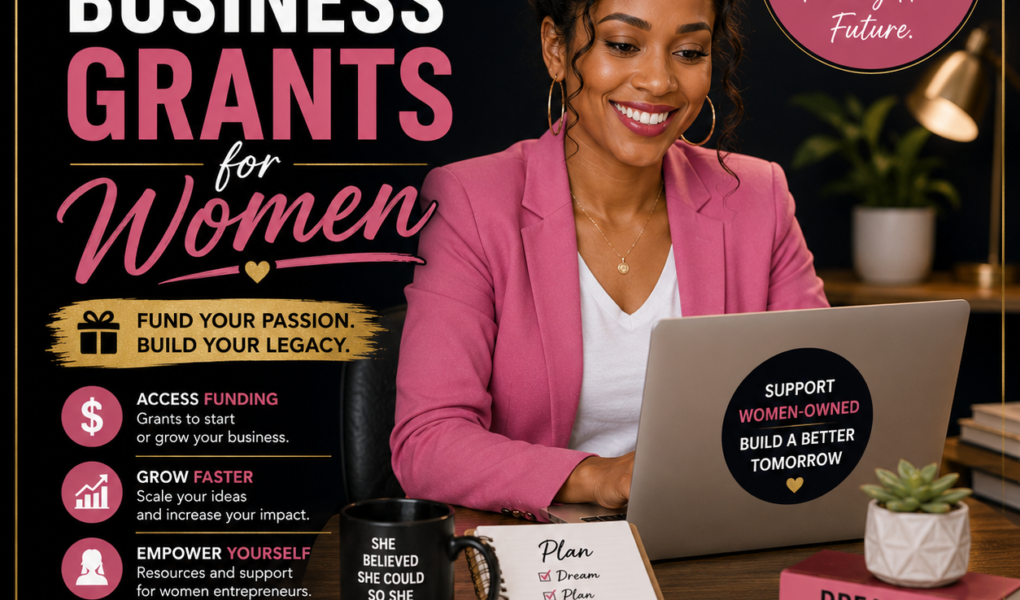
You do not need to hand over a piece of your dream just because you need money to grow it. Too many women entrepreneurs are told that the “serious” path to business funding means finding investors, pitching venture capitalists, taking out loans, bringing in business partners, or giving someone else a say in the company they worked so hard to build.
But that is not the only path. For many women-owned businesses, that path is not even the best path.
Maybe you are a coach with a powerful digital course idea, but you need money for a better website, email software, ads, and video tools.
Maybe you own a boutique and need inventory before your next busy season.
Maybe you are a baker who needs a commercial oven, a consultant who needs branding support, a freelancer who needs better software, a nonprofit founder who needs program supplies, or a mompreneur trying to grow a home-based business without risking your family’s savings.
The problem is not always ambition. Many women are not avoiding investors because they want to “play small.”
Many women are avoiding investors because they want ownership, freedom, creative control, flexible growth, and the right to build a business that fits their values.
They do not want pressure to scale too fast, chase profit at any cost, or explain every decision to someone who does not understand the mission.
That is why grants for women-owned businesses matter. Grants can give women entrepreneurs access to business funding without repayment, without equity, and without investor control.
Grant availability, deadlines, award amounts, and eligibility rules can change, so always check the official grant website before applying.
Why Women-Owned Businesses Should Consider Grants Before Looking for Investors
Grants are one of the most powerful forms of non-dilutive funding for women entrepreneurs because they can help you grow your business without giving up ownership.
A grant is different from a loan because you usually do not have to repay it.
A grant is different from an investor because you usually do not have to give away shares in your company.
A grant is different from venture capital because it does not normally require you to build a business that can deliver high-speed returns to outside investors.
This matters because ownership is not just a legal detail. Ownership is power. It decides who controls the brand, who makes final decisions, who benefits from future profits, and who gets to shape the long-term vision of the business.
When a woman founder gives up equity too early, she may receive money, but she may also lose flexibility. That tradeoff is not always wrong, but it should never be treated as the only option.
Grants can support practical business needs such as:
- Buying equipment, tools, supplies, or inventory.
- Paying for website design, branding, marketing, or photography.
- Upgrading business software, bookkeeping systems, or e-commerce platforms.
- Attending training, coaching, certification programs, or industry events.
- Hiring a part-time assistant, contractor, designer, or marketing support.
- Launching a community program, product line, online course, or service package.
- Testing a business idea before taking on debt or raising investor money.
A coach launching a digital course may use grant funding to pay for course software, a sales page, and email marketing.
A boutique owner may use a grant to buy inventory before a holiday season.
A baker may use grant money for packaging, a mixer, or a commercial kitchen rental.
A nonprofit founder may use a grant to launch a pilot program for girls, mothers, immigrants, or underserved families.
A freelance designer may use funding to upgrade her laptop and portfolio website.
The point is simple. Grants can help women entrepreneurs move forward without forcing them to borrow money, chase investors, or wait until their business is already “big enough” to deserve support.
CTA: Join Opportunities for Women Founding Membership if you want ongoing support finding grants, funding opportunities, business resources, and practical guidance designed for women entrepreneurs who want to grow without giving up ownership or waiting for investors.
What Makes a Grant “Investor-Free” and Why That Matters
An investor-free grant is funding that does not require you to sell ownership in your business.
In most cases, a true grant does not require equity, ownership shares, board control, profit participation, or repayment. This is why many women search for grants that do not require equity, small business funding without investors, and free business funding for women.
Still, not every funding opportunity works the same way. Before applying, you need to understand the difference between common funding options.
Grants: Grants usually provide money or business support that does not have to be repaid. Some grants are unrestricted, while others must be used for approved expenses. Some are for for-profit businesses. Others are for nonprofits, research, community programs, or social impact work.
Loans: Loans must be repaid, usually with interest. A loan may help you grow, but it creates debt. If your sales are not steady, repayment can become stressful.
Investors: Investors give money in exchange for ownership, equity, future profits, or influence. This can work for high-growth startups, but it may not fit women who want full control.
Pitch competitions: Some pitch competitions offer cash awards that work like grants. Others offer investment or require participation in an accelerator. Always read the rules before applying.
Crowdfunding: Crowdfunding allows many people to support your business. Some crowdfunding is donation-based or rewards-based. Other crowdfunding can involve debt or investment. IFundWomen describes grants as a debt-free source of funding and also connects entrepreneurs with grant opportunities through corporate partners and applications. (IFW)
Revenue-based financing: This is usually not a grant. You receive money and repay it through a percentage of future revenue. It may not require equity, but it still creates a payment obligation.
Venture capital: Venture capital is investor money for companies with high-growth potential. It usually requires equity and investor expectations.
Sponsorships: Sponsorships are usually marketing partnerships. A company may provide money, products, or exposure in exchange for brand visibility, content, events, or audience access.
The key lesson is this: “free money” is not always free, and “grant-style” funding is not always a traditional grant. Some opportunities offer cash awards, coaching, publicity, or business tools, but they may have conditions. Read the eligibility rules, terms, taxes, reporting requirements, publicity rules, and ownership language before you apply.
12 Grants for Women-Owned Businesses That Do Not Require Investors
Below are 12 grants, grant-style programs, and grant categories women-owned businesses can research.
Some are national.
Some are local.
Some are ongoing.
Some open during specific application windows. Always confirm current deadlines, award amounts, and eligibility rules on the official website.
1. Amber Grant for Women
The Amber Grant is one of the most searched business grants for women entrepreneurs. WomensNet says it gives away Amber Grant funding every month and has expanded into startup grants, business category grants, and year-end grants. Current rules state that applicants must be women age 18 or older who own at least 50% of a business based in the United States or Canada, and eligible businesses can include pre-revenue ventures, idea-stage startups, and some revenue-generating nonprofits. (ambergrantsforwomen.com)
Best for: women entrepreneurs, startup founders, home-based businesses, service providers, creatives, online businesses, nonprofits, and product-based businesses.
Why it helps: it is simple, founder-story driven, and friendly to early-stage businesses.
Money may be used for: equipment, marketing, product development, inventory, website costs, startup expenses, business tools, or expansion needs.
Application tip: do not write like a corporate robot. Explain what your business does, why it matters, how much progress you have made, and exactly how the money would help.
Example: a woman who sells handmade skincare products could apply to purchase packaging, labels, product photography, and vendor booth materials.
2. IFundWomen Grants and Partner Grant Programs
IFundWomen, now IFW by Honeycomb Credit, connects small businesses with grants, crowdfunding, coaching, workshops, and partner funding opportunities. Its grant page describes grants as debt-free funding and lists corporate partners that have supported grant opportunities, including brands such as Visa, American Express, adidas, Caress, and others. (IFW)
Best for: women entrepreneurs who want access to multiple partner grant opportunities through one platform.
Why it helps: IFundWomen can be useful for women who want more than one funding route, because it combines grants, education, and visibility.
Money may be used for: marketing, growth campaigns, product launches, coaching, business education, operations, and campaign support, depending on the partner grant rules.
Eligibility: varies by partner program. Some grants may focus on industry, location, business stage, revenue, identity, or impact.
Application tip: complete your business profile carefully and keep your answers strong, because partner grants may use your submitted information to match you with opportunities.
Example: a Latina e-commerce founder could use IFundWomen to look for partner grants that support women-owned retail, consumer products, or community-centered brands.
3. Tory Burch Foundation Fellows Program
The Tory Burch Foundation Fellows Program is not always a simple cash grant, so women should read the current cycle rules carefully. It is a strong investor-free opportunity because it provides women entrepreneurs with tools, peer network access, coaching, advisor access, and business education. The current program criteria describe eligible businesses as for-profit, majority women-owned and controlled, formed under U.S. law, operating in the United States, and generating at least $75,000 annually. (Tory Burch Foundation)
Best for: established women-owned businesses that are already generating revenue and need support to scale.
Why it helps: women get strategic support, credibility, connections, and growth education without automatically giving up equity.
Money may be used for: this depends on the year’s benefits, so applicants should check whether the current cohort includes cash, loans, business services, or non-cash support.
Eligibility: usually focused on women entrepreneurs with meaningful ownership and management roles.
Application tip: show that your business is ready for growth, not just that you need help. Explain sales, customers, traction, challenges, and future direction.
Example: a woman-owned food brand earning steady revenue could apply to strengthen retail strategy, operations, leadership, and market expansion.
4. HerRise MicroGrant
The HerRise MicroGrant supports under-resourced women entrepreneurs, including women of color. HerSuiteSpot states that the HerRise MicroGrant provides $1,000 each month, and eligible businesses must be 51% women-owned, registered in the United States, and have less than $1 million in gross revenue. (HerSuiteSpot)
Best for: under-resourced women, women of color, early-stage founders, service providers, community-focused businesses, and small businesses with a clear need.
Why it helps: the grant is small but practical. A $1,000 grant can pay for software, packaging, marketing materials, website improvements, equipment, or professional services.
Money may be used for: computers, equipment, software, marketing materials, website creation, and similar business needs.
Eligibility: women-owned, U.S.-registered businesses under the stated revenue threshold.
Application tip: make your need specific. Instead of saying, “I need money for my business,” say, “I need $1,000 to purchase email marketing software, update my website checkout page, and print new product labels.”
Example: a Black woman entrepreneur selling educational products could apply to improve her online store and marketing materials.
5. Visa She’s Next Grant Program
Visa’s She’s Next initiative supports women-owned small businesses through grants, exposure, and inclusion in marketing campaigns. Visa describes She’s Next as part of its commitment to supporting underrepresented and undiscovered talent with cash grants and visibility. (Visa)
Best for: women-owned small businesses that want both funding and brand exposure.
Why it helps: Visa is a recognized corporate brand, and its grant rounds can provide credibility, visibility, and business support.
Money may be used for: business growth, marketing, operations, inventory, technology, or other approved expenses, depending on the specific round.
Eligibility: varies by country, partner, and application cycle.
Application tip: sign up for updates and prepare ahead of time, because corporate grant windows can open and close quickly.
Example: a woman-owned café, boutique, beauty brand, coaching business, or e-commerce shop could apply during an eligible U.S. grant round if she meets the requirements.
6. Cartier Women’s Initiative
The Cartier Women’s Initiative is a global program for women-owned and women-led impact businesses. The 2027 awards were open as of May 2026, with applications closing June 16, 2026. The Regional Awards page lists financial support of $100,000 for first-place awardees, $60,000 for second-place awardees, and $30,000 for third-place awardees. It focuses on impact-driven businesses and notes that nonprofits are not eligible for the Regional Awards. (Cartier Women’s Initiative)
Best for: women-led impact businesses with strong social or environmental value.
Why it helps: it combines grant funding, global visibility, leadership development, and a powerful network.
Money may be used for: growth, operations, team building, product development, expansion, research, and impact scaling, based on program rules.
Eligibility: women-owned or women-led impact-driven businesses that meet the current award criteria.
Application tip: do not only describe your product. Show measurable impact, revenue potential, sustainability, and how your business solves a real problem.
Example: a woman founder building a clean water, education technology, maternal health, climate, food access, or job training business could be a fit.
7. Freed Fellowship Grant
The Freed Fellowship Grant is a small business grant program for underrepresented and overlooked small business owners. Its website states that selected Fellows receive a $500 no-strings-attached grant, do not need to repay the money, and do not need to give up equity. It also states that applicants are considered for a $2,500 year-end grant, and that any micro or small business owner in the United States is eligible, with women and minorities especially encouraged to apply. (Freed Fellowship)
Best for: microbusiness owners, overlooked founders, solo entrepreneurs, freelancers, consultants, and small service businesses.
Why it helps: it offers funding, feedback, and business support.
Money may be used for: business-related expenses as the recipient sees fit.
Eligibility: U.S. micro and small business owners, based on current rules.
Application tip: focus on the strength of your business model. Explain your customer, offer, sales path, and how the grant would support your next move.
Example: a virtual assistant who wants to build a stronger website and email list could apply.
8. Galaxy Grant
Galaxy Grants support women and minority entrepreneurs. Galaxy of Stars states that Galaxy Grants are for new, experienced, or aspiring business owners, and that it has awarded over $420,000 in small business grants to women and minority-owned businesses since 2016. (Galaxy of Stars)
Best for: women entrepreneurs, minority business owners, new founders, aspiring founders, and side-hustle owners.
Why it helps: it is positioned for entrepreneurs at different stages, including people still thinking about starting a business.
Money may be used for: startup costs, operations, marketing, tools, inventory, or growth needs, depending on current grant rules.
Eligibility: women and minority entrepreneurs should check the current official requirements before applying.
Application tip: keep your application direct. Explain what you are building, who you serve, what progress you have made, and what the funding would change.
Example: an immigrant woman entrepreneur starting a mobile beauty service could apply for tools, booking software, and marketing materials.
9. Local Women’s Business Center Grants and Funding Referrals
Women’s Business Centers are not always direct grant providers, but they are important because they can connect women entrepreneurs to local funding, training, counseling, and business development support. The SBA says Women’s Business Centers provide free to low-cost counseling and training for women who want to start, grow, and expand small businesses. (sba.gov)
Best for: women who need local guidance, business documents, funding referrals, coaching, or help becoming grant-ready.
Why it helps: many local grants are not widely advertised. A Women’s Business Center may know about city programs, county funding, community lenders, corporate partnerships, and nonprofit business support programs.
Money may be used for: this depends on the specific local grant or partner program.
Eligibility: varies by local program.
Application tip: contact your nearest Women’s Business Center and ask specifically, “Are there current grants, pitch competitions, or local funding programs for women-owned businesses in my area?”
Example: a mompreneur running a home bakery could get help preparing a business plan and finding local food business grants.
10. State and City Small Business Grants for Women-Owned Businesses
State and city grants can be excellent because they may focus on local economic development, downtown business growth, minority-owned businesses, women-owned businesses, storefront improvements, childcare businesses, workforce development, technology, or disaster recovery. These grants change often and may depend on where your business is located.
Best for: women-owned businesses with a clear local presence.
Why it helps: local programs may have less national competition than large corporate grants.
Money may be used for: rent support, equipment, signage, storefront improvements, payroll, training, inventory, marketing, or expansion.
Eligibility: usually depends on business location, registration, industry, revenue size, number of employees, and how funds will support the community.
Application tip: search your city, county, and state economic development websites every month. Use keywords like “small business grant,” “women-owned business grant,” “minority business grant,” and “business recovery grant.”
Example: a woman-owned boutique in a downtown district could apply for a storefront improvement grant to upgrade signage, lighting, and displays.
11. Corporate Grants for Women Entrepreneurs
Corporate grants are offered by companies that want to support women-owned businesses, diverse founders, small businesses, or industry-specific entrepreneurs. IFundWomen lists corporate partners that have offered grant opportunities through its platform, which shows why women should monitor brand-backed grant rounds regularly. (IFW)
Best for: women entrepreneurs with strong brand stories, customer traction, community impact, or a business that matches the company’s mission.
Why it helps: corporate grants may offer money, mentorship, media exposure, products, business services, or networking.
Money may be used for: marketing, digital tools, inventory, hiring, product development, events, or growth campaigns, depending on the rules.
Eligibility: varies by sponsor, industry, business size, location, and application cycle.
Application tip: explain why your business fits the sponsor’s values. A beauty grant should hear about beauty impact. A retail grant should hear about customer demand. A technology grant should hear about innovation.
Example: a woman-owned wellness brand could apply for a corporate grant focused on health, self-care, beauty, or community well-being.
12. Foundation and Nonprofit Grants for Women-Led Businesses
Foundation and nonprofit grants can support women-led businesses, social enterprises, nonprofits, community programs, workforce training, education, childcare, arts, health, agriculture, climate, and economic empowerment. These grants are especially useful for women whose businesses create measurable community impact.
Best for: nonprofit founders, social impact founders, community-based businesses, education businesses, health-focused businesses, and women-led organizations serving underserved groups.
Why it helps: foundations often care about mission, impact, equity, and community change.
Money may be used for: programs, training, supplies, outreach, operations, pilot projects, community events, staff, or service delivery.
Eligibility: some foundations fund only 501(c)(3) nonprofits. Others may fund fiscally sponsored projects, social enterprises, or small businesses through special programs.
Application tip: do not apply until you know whether the funder supports for-profit businesses, nonprofits, or both. Match your application to the funder’s mission.
Example: a woman nonprofit founder launching a workforce readiness program for immigrant women could apply for a foundation grant focused on economic mobility.
CTA: Join Opportunities for Women Founding Membership if you want ongoing support finding grants, funding opportunities, business resources, and practical guidance designed for women entrepreneurs who want to grow without giving up ownership or waiting for investors.
How to Qualify for Grants Without Investors, Perfect Credit, or Big Connections
Many women think they need investors, perfect credit, a huge audience, a famous brand, or a large business to qualify for grants. That is not always true. Many grant programs care more about clarity, readiness, impact, customer need, community value, and how the money will be used.
You can become more grant-ready by preparing these items before you apply:
- Register your business legally if the grant requires it.
- Get an EIN from the IRS if you are in the United States.
- Open a business bank account.
- Create a simple one-page business plan.
- Write a short founder story.
- Prepare a clear business description.
- Know how much money you need and why.
- Build a simple grant budget.
- Gather photos, testimonials, sales records, press mentions, or impact proof.
- Explain how the grant will create measurable results.
For example, do not say, “I need $10,000 to grow my business.” That sounds vague.
Say this instead:
“I am requesting $10,000 to redesign my e-commerce website, purchase email marketing software for one year, update my brand photography, improve product packaging, and run a 60-day paid advertising campaign. This funding will help me increase online sales, improve customer trust, grow my email list by 2,000 subscribers, and prepare for the holiday sales season.”
That answer is stronger because it shows the amount, the purpose, the strategy, and the expected result. Funders do not want confusion. They want to understand what the money will do.
Similar Suggested Articles
- 50 Small Business Grants for Women Entrepreneurs in the USA in 2026
- How Women Entrepreneurs in Texas Can Qualify for Government Grants
- 15 Startup Grants for Black Women Entrepreneurs in the USA
- 10 Fast Approval Grants for Women-Owned Businesses in California
How to Apply for Women-Owned Business Grants With a Stronger Strategy
Winning grants is not only about finding opportunities. It is about matching the right grant to the right business story. A strong grant strategy saves time, protects your energy, and helps you avoid applying for grants that were never a good fit.
Use these practical grant application tips:
- Do not apply for every grant you see.
- Choose grants that match your industry, stage, location, identity, mission, or business model.
- Read the eligibility rules before writing anything.
- Follow the word count.
- Use specific numbers.
- Tell a clear founder story.
- Explain the problem your business solves.
- Show how the money will be used.
- Avoid sounding desperate.
- Focus on impact, growth, readiness, and results.
- Save your answers so you can reuse and customize them.
- Build a monthly grant application routine.
Here is a simple 30-day plan.
Week 1: Prepare business documents
Register your business if needed, organize your EIN, update your business description, gather photos, collect testimonials, prepare a short founder bio, and create a simple budget.
Week 2: Research grant opportunities
Look for grants based on your location, industry, identity, business stage, mission, and funding need. Save deadlines in a spreadsheet.
Week 3: Write and polish application answers
Draft your founder story, business summary, funding request, impact statement, and budget explanation. Edit for clarity.
Week 4: Submit applications and track deadlines
Submit your strongest applications first. Track submission dates, deadlines, login details, follow-up dates, and results.
Frequently Asked Questions About Grants for Women-Owned Businesses
1. Can women-owned businesses get grants without investors?
Yes. Many women-owned businesses can apply for grants without having investors. Some grants support startups, small businesses, nonprofits, freelancers, service providers, product businesses, online businesses, and minority women entrepreneurs. The key is to find grants that match your business type, location, stage, and purpose.
2. Do grants require me to give up equity in my business?
Most true grants do not require equity. That means you usually do not have to give away ownership shares, investor rights, board control, or profit participation. Still, always read the official rules because some pitch competitions, accelerators, or funding programs may use grant-like language while offering investment-style funding.
3. What documents do I need before applying for women-owned business grants?
You may need a business name, business registration, EIN, business bank account, founder bio, business description, budget, photos, testimonials, revenue information, tax documents, pitch deck, or proof of impact. Not every grant requires all of these, but preparing them early makes applications easier.
4. Are there grants for new women-owned businesses with no revenue yet?
Yes, some grants accept idea-stage, pre-revenue, or early-stage businesses. For example, Amber Grant rules currently mention pre-revenue ventures and idea-stage startups as eligible categories. (ambergrantsforwomen.com) New businesses should focus on a clear plan, strong founder story, customer need, and exact use of funds.
5. How often should I apply for business grants as a woman entrepreneur?
A good goal is to research grants every week and apply to a few strong-fit opportunities every month. Quality matters more than quantity. It is better to submit three focused applications than ten rushed ones that do not match your business.
Conclusion
You do not have to give up ownership to grow. You do not have to chase investors before you are ready.
You do not have to take on debt just because someone told you that grants are too competitive.
Grants are not guaranteed, and not every woman will win every opportunity she applies for. But grants can give women-owned businesses a real path to funding with more freedom, more confidence, and more control.
Your business does not have to look perfect before you seek support. It needs clarity. It needs a plan. It needs a strong story. It needs a clear funding request. And it needs you to keep showing up, applying, improving, and looking for the right opportunities.
CTA: Join Opportunities for Women Founding Membership if you want ongoing support finding grants, funding opportunities, business resources, and practical guidance designed for women entrepreneurs who want to grow without giving up ownership or waiting for investors.