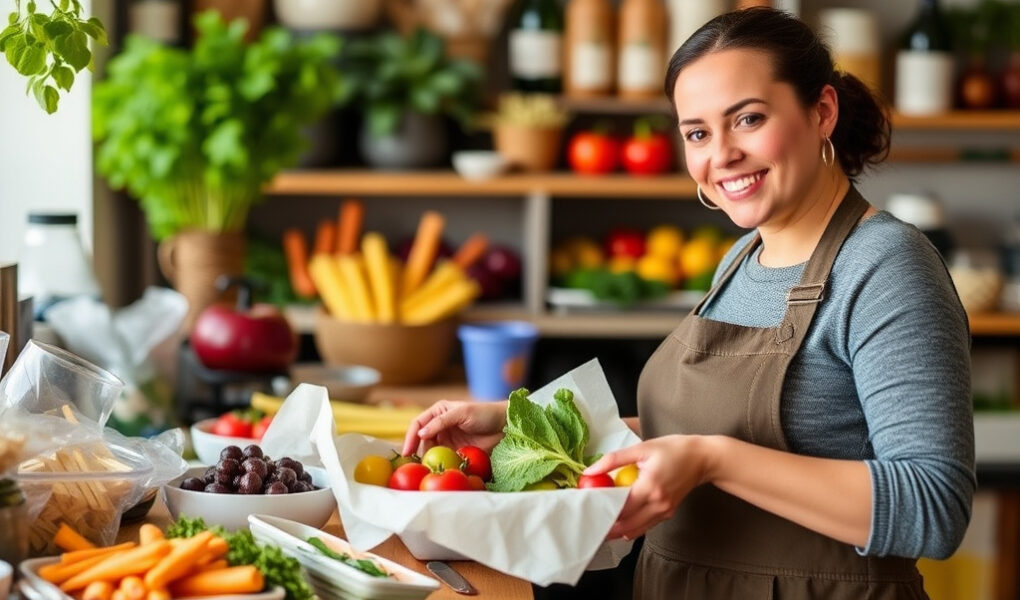
A woman can have the recipe everyone keeps asking for and still feel stuck at the same small table. Customers ask when her pepper sauce will be bottled. Neighbors want her pastries at birthdays, weddings, and school events. Market buyers ask whether she can supply in bulk. Instagram followers ask when she will ship nationwide. A
local café owner tells her the granola, juice, spice blend, frozen meals, or baked snacks would sell well on their shelf. At that point, the question is no longer, “Is the food good enough?”
The real question becomes, “How do I pay for the things that turn this loved food product into a serious business?”
That is where food business grants for women can become powerful. A food entrepreneur may need money for commercial kitchen rental, packaging, labels, food safety testing, licenses, insurance, equipment, cold storage, delivery, branding, inventory, wholesale outreach, farmers market fees, digital ordering systems, retail launch costs, or marketing that helps people find the product beyond friends and family.
Grants will not solve every business problem, and no opportunity should be treated as guaranteed money, but the right grant can help a woman-owned food business move from “people love this” to “this business is ready to grow.”
Below are 20 food business grants for women entrepreneurs, including programs for women-owned food brands, bakeries, restaurants, caterers, food trucks, beverage founders, packaged food companies, farmers market sellers, value-added producers, African women entrepreneurs, and women building community-centered food businesses.
Why Food Business Grants Matter for Women Entrepreneurs
Food businesses often grow in expensive stages. A woman may begin with one product at home, then move into farmers markets, then need a licensed kitchen, better packaging, nutrition facts, barcodes, insurance, a website, product photography, a refrigerated delivery plan, wholesale samples, and enough inventory to accept larger orders. Each stage creates a new cost, and those costs often arrive before the business has steady cash flow.
This is why grants for women food entrepreneurs matter. They can help reduce pressure on personal savings, credit cards, family loans, or high-interest debt.
A bakery grant can help a baker buy a commercial mixer or pay for packaging.
A restaurant grant can support signage, kitchen equipment, digital ordering, staff training, or marketing.
A food truck grant can help with permits, equipment repairs, point-of-sale tools, or catering expansion. A CPG grant for women founders can support shelf-ready packaging, food testing, retail outreach, and trade show preparation.
A USDA grant can help a farmer turn raw crops into branded food products, such as salsa, jam, cheese, flour, meat products, juices, or specialty packaged goods.
The most important thing to understand is that grants are not just about need. Funders want to see fit, readiness, demand, and a clear plan. A woman food entrepreneur should be able to explain what she sells, who buys it, what problem or desire it solves, how the business earns money, what growth stage she is in, what the grant will pay for, and how that support will unlock the next step.
20 Food Business Grants for Women Entrepreneurs to Research and Apply For
1. Stacy’s Rise Project
Organization: Stacy’s / PepsiCo in partnership with Hello Alice
Official link: Stacy’s Rise Project
Best for: Women founders in food and beverage consumer packaged goods
Good fit for: Packaged snacks, sauces, beverages, baked goods, pantry products, specialty foods, and shelf-ready food brands
The Stacy’s Rise Project is one of the strongest food business grants for women in consumer packaged goods because it is designed around women founders who are trying to rise inside the food and beverage space. Stacy’s describes the program as offering business grants, mentorship, networking opportunities, and other support, which makes it useful for founders who need more than a check. (stacyssnacks.com)
A woman selling plantain chips, granola, spice mixes, bottled sauces, cultural snacks, teas, or ready-to-drink beverages could position this opportunity around retail readiness. For example, a sauce founder might explain that customers already reorder her product, but she needs funding for shelf-stable testing, improved labels, UPC barcodes, case packaging, wholesale samples, and outreach to specialty grocers.
Reminder: Check the current deadline, eligibility rules, country or state restrictions, business stage requirements, and application cycle before applying.
2. Enthuse Foundation Pitch Competition
Organization: Enthuse Foundation
Official link: Enthuse Foundation Pitch Competition
Best for: Women founders in food, beverage, and CPG
Good fit for: Food brands with traction, packaged products, beverage startups, snack brands, and emerging CPG companies
The Enthuse Foundation Pitch Competition celebrates women making their mark in food, beverage, and CPG. Its official page describes the 2026 Pitch Competition and notes that finalists pitch live in front of judges, with cash and business-building prizes connected to the competition. The page also lists past criteria such as women ownership, U.S.-based business rules, sales requirements, and revenue limits, so applicants must read the current criteria carefully. (Enthuse Foundation)
This opportunity is especially useful for women who can explain their product clearly, show traction, and pitch growth with confidence. A beverage founder might use the pitch to explain how funding would support bottling, formulation, retail samples, distribution outreach, packaging redesign, or brand storytelling for a regional launch.
Reminder: Pitch competitions change criteria often. Always check the current year’s rules, application opening date, location requirements, revenue limits, and pitch expectations.
3. Enthuse Foundation Grants
Organization: Enthuse Foundation
Official link: Enthuse Foundation What We Do
Best for: Women entrepreneurs who need support for business tools, childcare, insurance, digital marketing, or growth needs
Good fit for: Food founders who need practical business support, not only production money
Enthuse Foundation supports women entrepreneurs through resources, grants, education, and founder-focused programming. Its grant program has supported women entrepreneurs with business-building funds, and the foundation’s work is strongly connected to women in food, beverage, and CPG. (Enthuse Foundation)
This is helpful for a woman food entrepreneur whose biggest growth barrier is not only ingredients or equipment, but the hidden costs around running the business. A caterer could use support for insurance, branding, digital marketing, or accounting tools. A packaged food founder could use support for e-commerce improvements, product photography, label design, or sales materials.
Reminder: Check whether the specific grant cycle is open, what expenses are allowed, whether your business stage fits, and whether the program is limited by geography or industry category.
4. Spearhead Global Capital and Catalyst Grant
Organization: Spearhead Global and Enthuse Foundation
Official link: Spearhead Global Capital and Catalyst Grant
Best for: Women-founded food or beverage businesses ready to scale
Good fit for: Established food and beverage brands with sales history and growth plans
The Spearhead Global Capital and Catalyst Grant is specifically positioned for women-founded food or beverage businesses, and the official page lists requirements such as minimum lifetime sales, business age, and willingness to consider investors within a future timeline. (Enthuse Foundation)
This is not usually the best fit for a brand-new home kitchen idea. It is better for a food or beverage founder who already has proof of demand and wants to scale. A founder selling bottled cold brew, frozen meals, spice blends, or a specialty snack line could position the grant around manufacturing, packaging improvements, retail sales support, distributor conversations, or inventory for larger purchase orders.
Reminder: Review the current eligibility rules carefully because this opportunity may require traction, sales history, business age, and scaling readiness.
5. Amber Grant for Women — Restaurant, Food & Beverage Category
Organization: WomensNet
Official link: Amber Grant Restaurant, Food & Beverage
Best for: Women-owned restaurants, bakeries, food trucks, catering businesses, packaged food brands, and beverage businesses
Good fit for: Small food businesses at startup or growth stage
The Amber Grant has a specific food and beverage category page, and WomensNet states that it awards monthly grants to women-owned businesses, with monthly winners eligible for annual grants. (ambergrantsforwomen.com)
This is useful for food entrepreneurs because it is not limited to one type of food business. A baker could request support for a commercial oven, mixer, packaging, and local marketing. A food truck owner could use funding for signage, repairs, permit costs, catering equipment, or a digital ordering system. A restaurant owner could apply for support tied to equipment upgrades, online ordering, local ads, or expansion into packaged sauces or frozen meals.
Reminder: Check the current award structure, application fee, monthly deadlines, and category rules before applying.
6. All Amber Grants
Organization: WomensNet
Official link: All Amber Grants
Best for: Women-owned businesses across many categories, including startup and growth-stage food businesses
Good fit for: Women who want one application to open consideration for multiple WomensNet grant categories
The All Amber Grants page explains that WomensNet awards grants across different categories, including monthly grants and additional grant opportunities for women-owned businesses. (ambergrantsforwomen.com)
This is practical for women food entrepreneurs because your business may fit more than one angle. A woman selling African spices online may fit food and beverage, e-commerce, startup, or business-specific categories depending on the current grant structure. A jam maker, food truck owner, chef, caterer, or packaged snack founder can use the application to explain both the business and the specific growth milestone the grant would support.
Reminder: Read the current grant categories, award amounts, application requirements, deadlines, and selection process.
7. IFundWomen Universal Grant Application
Organization: IFundWomen
Official link: IFundWomen Apply for Grants
Best for: Women entrepreneurs who want to be considered for current and future grant opportunities
Good fit for: Women food entrepreneurs who want to enter a broader funding pipeline
IFundWomen’s Universal Grant Application is designed to help women entrepreneurs be considered for sponsored grant opportunities when their businesses match partner criteria. IFundWomen describes the universal application as a way to be considered for future grants and funding opportunities. (IFW)
A woman food founder should use this as a funding visibility tool. A tea founder, caterer, packaged sauce founder, or bakery owner can create a strong profile that explains what the business sells, who it serves, its traction, and what funding would unlock. Even when a specific grant is closed, being in the system may help the business match with future opportunities.
Reminder: Do not stop at submitting a general application. Keep your business profile current, add strong traction details, and check for active grant matches.
8. Visa She’s Next Grant Programme
Organization: Visa
Official link: Visa She’s Next
Best for: Women-owned small businesses in eligible countries and regions
Good fit for: Food businesses that need funding, education, coaching, digital tools, and business visibility
Visa’s She’s Next grant programme supports women-owned small businesses through funding and education in different regions, and Visa reports that the programme has deployed grants and coaching support to women-owned businesses. (Visa)
This can be helpful for a woman-owned restaurant, café, bakery, food truck, catering brand, or packaged food company that wants to improve digital payments, online sales, customer systems, or growth strategy. A bakery owner could position the opportunity around moving from walk-in orders to online preorders, delivery partnerships, branded packaging, and digital marketing.
Reminder: Visa She’s Next opportunities vary by country and cycle, so confirm your country’s active program, deadline, eligibility rules, and partner platform.
9. AT&T Small Business Contest / She’s Connected by AT&T
Organization: AT&T
Official link: She’s Connected by AT&T
Best for: Women-owned small businesses in the United States that need funding, visibility, technology support, and mentorship
Good fit for: Restaurants, bakeries, food trucks, caterers, and food brands with a strong story and community impact
AT&T’s Small Business Contest page describes a prize package that includes a small business grant, connectivity, tools, resources, community access, and a feature through She’s Connected by AT&T. (AT&T)
This is a strong fit for a food entrepreneur whose business depends on digital visibility. A food truck owner could explain how funding and technology support would improve online ordering, catering bookings, event scheduling, customer communication, and mobile payment systems. A restaurant owner could connect the opportunity to delivery marketing, Wi-Fi-supported operations, and stronger customer engagement.
Reminder: Confirm current contest rules, U.S. eligibility requirements, prize package details, deadlines, and storytelling requirements.
10. Verizon Small Business Digital Ready Grants
Organization: Verizon and partners
Official link: Verizon Small Business Digital Ready Funding
Best for: U.S.-based small businesses that complete eligible courses or events and apply for grant funding
Good fit for: Food businesses that need digital marketing, e-commerce, customer systems, or business education
Verizon’s Small Business Digital Ready platform provides training and grant opportunities, and the funding page describes small business grants, eligibility requirements, application deadlines, and support for U.S.-based small businesses. (Verizon Digital Ready)
This can work well for a food entrepreneur who needs to strengthen the business side of the brand. A meal prep founder could complete digital marketing training, then apply for grant funding to improve website ordering, email marketing, packaging photography, local ads, or customer retention systems. A bakery could use this type of support to move from social media orders to a clearer online ordering process.
Reminder: Check the current course completion requirements, eligible locations, business type rules, and grant deadline before applying.
11. HerRise MicroGrant
Organization: HerSuiteSpot
Official link: HerRise MicroGrant
Best for: Women entrepreneurs, including under-resourced women and women of color entrepreneurs
Good fit for: Small food businesses that need a targeted microgrant for a specific business need
HerSuiteSpot describes the HerRise MicroGrant as financial support for innovative women entrepreneurs who are building community-impacting businesses and often struggle to secure funding. (HerSuiteSpot)
This is useful for a woman who needs a smaller but strategic amount of support. A baker may use a microgrant for packaging, labels, booth fees, or a mixer upgrade. A sauce founder could use it for product photography, label compliance, or initial wholesale samples. A caterer could use it for equipment, branded uniforms, insurance, or a better booking system.
Reminder: Microgrants are usually competitive and specific. Check the application cycle, award amount, eligibility rules, and allowed use of funds.
12. Giving Joy Microgrant
Organization: Giving Joy
Official link: Giving Joy Microgrant
Best for: Women entrepreneurs worldwide with ideas or businesses that create community benefit
Good fit for: Food businesses with a social impact angle, especially those serving women, girls, families, or local communities
Giving Joy awards one-time microgrants to women-led initiatives, and its application page states that women can apply from any country or territory and may use the grant to start or expand a business, nonprofit, charity, NGO, or community project. (Giving Joy)
This is a strong fit when the food business has a clear community benefit. A woman selling affordable nutritious meals in a low-income community could explain how the grant would help her buy equipment, increase meal production, or reach more families. A food entrepreneur training girls in baking or supporting women farmers through local sourcing could connect the business model to social benefit.
Reminder: Make sure your application explains both the business idea and the community benefit. Check the current cycle, award amount, deadlines, and rules.
13. Tory Burch Foundation Fellows Program
Organization: Tory Burch Foundation
Official link: Tory Burch Foundation Fellows
Best for: Women entrepreneurs who need business education, networks, mentorship, and growth support
Good fit for: Women food founders who are ready to lead, scale, and build stronger business systems
The Tory Burch Foundation Fellows Program connects women entrepreneurs with tools, networks, and support to scale and lead their businesses. (Tory Burch Foundation)
This is not only about immediate cash. For a woman food entrepreneur, the biggest value may be strategy, visibility, mentorship, and access to a stronger business network. A CPG founder preparing for retail growth could use the fellowship to sharpen pricing, operations, leadership, wholesale planning, and fundraising readiness. A restaurant owner expanding into packaged products could use the support to think through brand structure, margins, hiring, and growth.
Reminder: Check the current application cycle, business stage requirements, country rules, and whether your food business is ready for a fellowship-style growth program.
14. Cartier Women’s Initiative
Organization: Cartier Women’s Initiative
Official link: Cartier Women’s Initiative
Best for: Women-led and women-owned impact businesses across sectors, including sustainable food, agriculture, food waste, nutrition, and community food access businesses
Good fit for: Impact-driven food businesses solving a social or environmental problem
The Cartier Women’s Initiative is an international entrepreneurship program for women impact entrepreneurs, open across sectors and geographies, with a focus on businesses creating social or environmental impact. (Cartier Women’s Initiative)
This is a better fit for food businesses with a strong impact model, not just a normal product business. A founder reducing food waste through upcycled snacks, improving nutrition access, supporting smallholder farmers, building sustainable packaging, or creating affordable healthy food options could position the business around measurable impact and scalable change.
Reminder: Cartier is highly competitive. Review the current award categories, impact requirements, business stage rules, deadlines, and documentation before applying.
15. Flourish Africa Grant
Organization: Flourish Africa
Official link: Flourish Africa Grant
Best for: Female entrepreneurs in Africa, especially women who need training, mentoring, coaching, and funding support
Good fit for: African women in food processing, catering, packaged foods, agriculture, beverage production, and food retail
The Flourish Africa Grant supports African female-owned enterprises through training, coaching, mentoring, and funding, and its official page describes the program as a multi-year initiative to uplift African women in business. (Flourish Africa)
This is useful for African women building food businesses that need both knowledge and capital. A woman producing spices, chin-chin, juices, frozen foods, garri products, snacks, cakes, or packaged cultural foods could position the grant around formalizing production, improving packaging, increasing capacity, reaching retailers, and creating jobs.
Reminder: Confirm the current cohort, country eligibility, training requirements, business registration expectations, deadlines, and funding rules.
16. Tony Elumelu Foundation Entrepreneurship Programme
Organization: Tony Elumelu Foundation
Official link: Tony Elumelu Foundation
Best for: African entrepreneurs, including women in agriculture, agribusiness, food processing, food service, and food and beverage ventures
Good fit for: Early-stage African food entrepreneurs who need training, mentorship, seed capital, and business structure
The Tony Elumelu Foundation supports entrepreneurship across Africa and describes its work as empowering entrepreneurs across all 54 African countries, with a focus on job creation and economic empowerment. (The Tony Elumelu Foundation)
A woman food entrepreneur in Africa could use this program to strengthen her business model, pricing, market plan, and growth strategy. A founder producing packaged spices, beverages, snacks, bakery products, farm-based foods, or catering services should show how the business can create income, jobs, local sourcing, and market access.
Reminder: Check the current application portal, eligibility rules, business age requirements, training expectations, deadlines, and funding terms.
17. USDA Value-Added Producer Grant
Organization: USDA Rural Development
Official link: USDA Value-Added Producer Grants
Best for: Agricultural producers turning raw farm products into value-added food products
Good fit for: Women farmers, ranchers, and producer-led businesses making jams, sauces, dairy products, meat products, snacks, grains, beverages, or branded packaged goods
The USDA Value-Added Producer Grant helps agricultural producers enter value-added activities related to processing and marketing new products. USDA describes the goals as generating new products, expanding marketing opportunities, and increasing producer income. (rd.usda.gov)
This is one of the most relevant USDA grants for food businesses connected to farming. A woman farmer growing tomatoes could apply to develop bottled salsa. A fruit grower could turn produce into jam. A dairy producer could develop cheese or yogurt. A grain producer could create branded flour or packaged mixes. The application should explain the raw product, the value-added product, the market, the producer benefit, and the working capital or planning support needed.
Reminder: USDA grants can have detailed rules, matching requirements, and federal application steps. Check current deadlines, state contacts, eligibility, and whether your business qualifies as an agricultural producer.
18. USDA Farmers Market Promotion Program
Organization: USDA Agricultural Marketing Service
Official link: USDA Farmers Market Promotion Program
Best for: Producer-to-consumer markets, farmers markets, CSAs, local food marketing projects, and food entrepreneurs connected to direct farm sales
Good fit for: Farmers market vendors, producer groups, local food projects, and direct-to-consumer food sales initiatives
The USDA Farmers Market Promotion Program supports projects that strengthen direct producer-to-consumer markets, and USDA’s page states that the FY26 application period is open until June 5, 2026. (ams.usda.gov)
This is useful for food entrepreneurs connected to direct farm sales or local market development. A woman farmer selling produce, eggs, honey, spices, baked goods made from farm products, or value-added foods at farmers markets may benefit through a larger project led by an eligible applicant or partnership. The funding can support marketing, outreach, market development, customer access, and systems that help local producers sell directly.
Reminder: Check whether you can apply directly or need to partner with a market, nonprofit, producer group, or eligible organization.
19. USDA Local Food Promotion Program
Organization: USDA Agricultural Marketing Service
Official link: USDA Local Food Promotion Program
Best for: Local and regional food businesses, food hubs, aggregation, processing, distribution, and local food market development
Good fit for: Food hubs, local food processors, aggregation projects, and women food entrepreneurs connected to regional food systems
The USDA Local Food Promotion Program supports local and regional food business development, and USDA’s current page states that the FY26 application period is open until June 5, 2026. (ams.usda.gov)
This can support food businesses that are part of a larger local food system. A woman entrepreneur who aggregates produce from small farmers, processes local crops, supplies institutions, or builds a regional food distribution model could fit better here than under a simple small business grant. The application should explain the local food system gap, partners, buyers, producers served, distribution plan, and how the project expands market access.
Reminder: Review eligibility carefully. Many USDA AMS grants work best through partnerships, producer groups, nonprofits, local food organizations, or regional entities.
20. USDA Regional Food System Partnerships
Organization: USDA Agricultural Marketing Service
Official link: USDA Regional Food System Partnerships
Best for: Partnerships that strengthen local and regional food systems
Good fit for: Projects involving farmers, food businesses, nonprofits, institutions, distributors, community partners, and regional food access goals
The USDA Regional Food System Partnerships program supports partnerships that strengthen regional food systems, and USDA’s page states that the FY2026 application period is open until June 5, 2026. (ams.usda.gov)
This is not usually for a solo food entrepreneur trying to buy a mixer. It is better for a bigger collaboration. A woman-owned food processor could partner with farmers, a food hub, a nonprofit, a local school system, or a community distributor to build a regional product line, improve processing capacity, reduce food waste, or increase access to locally produced foods.
Reminder: This opportunity requires strong partners, a clear regional food system problem, and a serious project plan. Check the NOFO, eligibility, matching requirements, partnership expectations, and deadline.
How to Know Which Food Business Grant Fits Your Stage
The best food business grant is not always the biggest one. It is the one that matches your stage, your proof, your location, and your next growth step. A woman at idea stage should not waste all her time applying for scale-up grants that require sales history. A woman with $500,000 in lifetime sales should not only chase beginner microgrants if she needs retail expansion capital, manufacturing support, and investor readiness.
At the idea stage, look for microgrants, business training programs, startup competitions, and universal grant applications. Your goal is to prove the concept, test the market, create a simple budget, and show why your product has potential.
At the home kitchen stage, focus on grants that can help you move toward legal and safe production. This may include support for licensing, permits, cottage food compliance where allowed, commercial kitchen rental, packaging, labels, recipe testing, and basic branding.
At the farmers market stage, look for grants that support booth fees, signage, packaging, product display, sampling, customer feedback, local marketing, and inventory. This is also the stage where you should start tracking sales, repeat customers, testimonials, and best-selling products.
At the licensed commercial kitchen stage, you can apply for stronger food business grants because you can show readiness. Funders may take you more seriously when you have proper production space, food safety systems, insurance, and the ability to fulfill orders.
At the food truck or restaurant stage, look for small business grants that support equipment, technology, signage, repairs, online ordering, catering expansion, marketing, and customer growth. Your application should show foot traffic, menu demand, revenue, reviews, and local community value.
At the packaged product or CPG stage, prioritize food and beverage grants, pitch competitions, accelerator-style programs, retail readiness support, and mentorship. You may need funding for formulation, nutrition facts, packaging, barcodes, case packs, shelf-life testing, product photography, wholesale outreach, and trade shows.
At the wholesale or retail-ready stage, focus on programs that understand growth. Your application should show purchase orders, retail interest, distribution plans, margins, production capacity, and how funding will help you meet demand.
At the export or regional expansion stage, look for programs that support scaling, partnerships, logistics, certifications, compliance, market access, and larger distribution systems. Your application must move beyond passion and show operational discipline.
How to Write a Strong Grant Application for a Food Business
A strong food business grant application should make the funder hungry for the product and confident in the business. Do not only describe how delicious the food is. Explain why people buy it, who buys it, how often they buy it, what problem it solves, what market it fits, and what specific growth step the grant will fund.
Start with your business story, but keep it focused. Share why you created the food product, who it serves, and what makes it different. If your sauce comes from a family recipe, explain the cultural value, but also explain the customer demand. If your bakery serves gluten-free customers, explain the market need. If your meals support busy mothers, seniors, students, or people with special diets, connect the story to a clear buyer group.
Show customer demand with proof. Use sales records, farmers market results, repeat orders, wholesale inquiries, catering bookings, online reviews, testimonials, waitlists, social media engagement, email subscribers, and photos of your product in real settings. A funder should not have to guess whether people want the food.
Explain your revenue model. Do you sell at markets, online, wholesale, through a restaurant, through catering, through subscriptions, or through retail partners? What is your best-selling product? What is your price? What are your margins? What does one larger order require? Many food entrepreneurs lose points because they describe the food but not the business.
Include food safety readiness. Mention licenses, permits, insurance, commercial kitchen use, packaging rules, nutrition labels, shelf-life testing, cold chain needs, or food handling training where relevant. Funders want growth, but they also want responsible growth.
Create a clear use-of-funds plan. Do not simply write, “I need money to grow.” Break the request into practical categories, such as equipment, packaging, labels, testing, marketing, inventory, kitchen rental, delivery, technology, permits, or market fees. If you ask for $5,000, show how the $5,000 will be used.
Add a growth plan and timeline. Explain what will happen in the first 30, 60, and 90 days after receiving support. For example, a sauce founder may complete shelf-life testing, order labels, produce the first wholesale batch, create a retail sell sheet, and pitch 20 local stores.
Use photos and proof wherever allowed. Good product photos, packaging mockups, market booth images, customer testimonials, sales screenshots, press mentions, and retail inquiries can make your application stronger.
Most importantly, explain why the grant will unlock the next stage. The funder should understand that the money is not just helping you survive. It is helping you move from home sales to licensed production, from farmers markets to wholesale, from catering to meal prep delivery, from local demand to regional sales, or from raw farm products to branded value-added foods.
Common Mistakes Women Food Entrepreneurs Make When Applying for Grants
One major mistake is applying to every grant without checking fit. A grant for impact businesses may not fit a normal bakery unless the bakery has a real community impact model. A USDA value-added grant may not fit a food truck unless the business is producer-based or connected to eligible agricultural production. A CPG pitch competition may not fit a restaurant that has no packaged product.
Another mistake is describing the food product but not the business model. Funders may enjoy reading about your cakes, sauces, juices, snacks, or meals, but they still need to understand pricing, customers, production, sales channels, growth plans, and use of funds.
Many applicants also forget licenses, permits, insurance, and food safety requirements. In the food industry, growth without compliance can become risky. If you want money for production, packaging, or retail, show that you understand the rules connected to your product.
A weak use-of-funds plan is another problem. Do not ask for “marketing money” without explaining whether it will pay for product photography, farmers market materials, ads, packaging design, website improvements, wholesale samples, or email marketing. Specific requests sound more credible.
Some women rely only on emotional language without proof of demand. Your story matters, but proof matters too. If customers are asking for nationwide shipping, show screenshots, testimonials, preorders, or repeat sales. If a café wants to stock your product, mention the inquiry. If your farmers market booth sells out, track those numbers.
Food entrepreneurs also underestimate packaging, distribution, and marketing costs. A product may taste amazing, but if the label looks weak, the packaging leaks, the shelf life is unclear, the delivery system is unreliable, or nobody knows the product exists, growth will slow down.
Similar Suggested Articles
Texas Grants for Women Entrepreneurs: Small Business Funding You Should Not Ignore
50 Small Business Grants for Women Entrepreneurs in the USA in 2026
40 Business Funding Opportunities Women Can Apply for Today
20 Global Grants for Women Entrepreneurs Outside the U.S.
How Women Entrepreneurs in Texas Can Qualify for Government Grants
15 Startup Grants for Black Women Entrepreneurs in the USA
10 Fast Approval Grants for Women-Owned Businesses in California
12 Grants for Women-Owned Businesses That Do Not Require Investors
FAQs About Food Business Grants for Women Entrepreneurs
1. Are there grants specifically for women-owned food businesses?
Yes. Some programs, such as Stacy’s Rise Project, Enthuse Foundation opportunities, and food and beverage grant categories under WomensNet, are especially relevant for women food entrepreneurs. Other programs are broader women’s business grants that can still support restaurants, bakeries, food trucks, catering companies, beverage brands, and packaged food businesses if the applicant fits the rules.
2. Can I get a grant for a home-based food business?
Possibly, but it depends on the grant and your local food laws. A home-based baker, sauce maker, or snack seller may be more competitive when she can explain her cottage food compliance, sales traction, customer demand, and plan to move into a licensed commercial kitchen when needed.
3. What grants can help me start a bakery, catering business, food truck, or packaged food brand?
For early-stage businesses, research Amber Grants, HerRise MicroGrant, Giving Joy Microgrant, IFundWomen Universal Grant Application, Verizon Small Business Digital Ready, and local small business grants. For packaged food brands, also research Stacy’s Rise Project, Enthuse Foundation programs, and CPG pitch competitions.
4. Do USDA grants support women food entrepreneurs?
USDA grants can support food entrepreneurs when the business fits the program rules. The USDA Value-Added Producer Grant is especially relevant for agricultural producers turning raw farm products into higher-value food products. USDA AMS programs such as FMPP, LFPP, and RFSP can support local and regional food systems, but they often require eligible applicants, partnerships, and strong project plans.
5. What should I prepare before applying for food business grants?
Prepare a short business story, product photos, sales records, customer testimonials, licenses or permit details, packaging samples, use-of-funds budget, growth timeline, market proof, and a clear explanation of how the grant will help your food business reach the next stage.
JOIN OPPORTUNITIES FOR WOMEN FOUNDING MEMBERSHIP
If you are tired of finding opportunities too late, guessing which grants fit your business, or trying to build your next move without guidance, join the Opportunities for Women Founding Membership. Inside, you get access to curated grants, scholarships, fellowships, remote jobs, business opportunities, templates, tools, and monthly coaching designed to help women take action with more clarity and confidence.
This membership does not promise that you will win grants. It gives you strategic support, opportunity discovery, guidance, templates, tools, and practical help so you can stop moving blindly and start preparing with more confidence.
A loved recipe is only the beginning. The real growth begins when a woman food entrepreneur learns how to fund the equipment, packaging, compliance, marketing, distribution, and market access that help a good product become a stronger business. Whether you sell cakes, sauces, snacks, spices, juices, frozen meals, cultural foods, farm products, or specialty packaged goods, the goal is not to chase every grant.
The goal is to choose the right opportunities, prepare proof, explain your business clearly, and show exactly how funding will help you move from demand to sustainable growth.