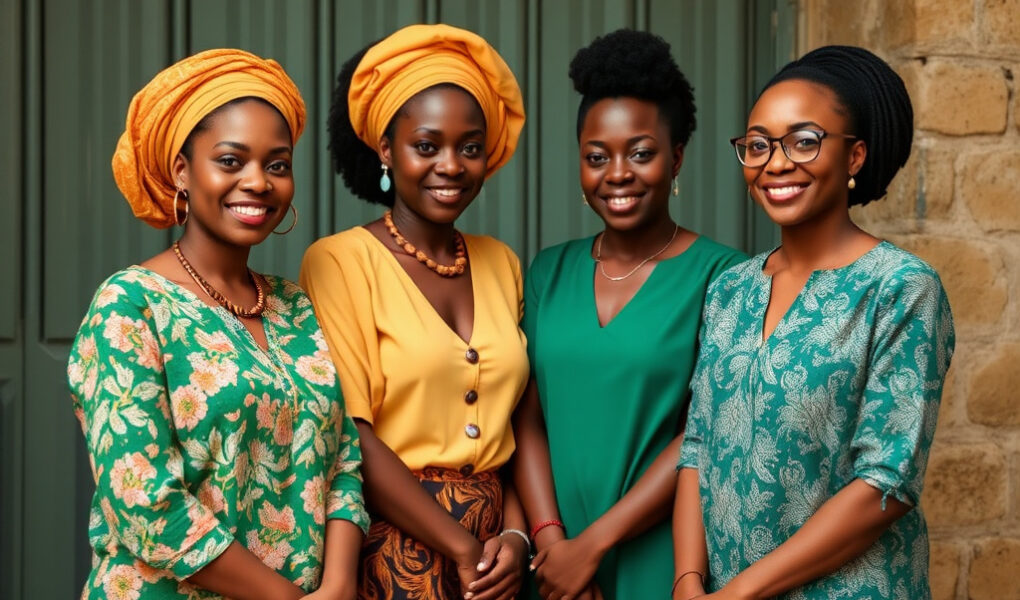
Amina did not need another motivational quote. By 11:47 p.m., her kitchen table in Lagos had become a funding command center: skincare jars on one side, a half-written application on her laptop, three saved grant links in her WhatsApp, and one confusing deadline that said “accelerator funding” but asked for traction, revenue, export plans, and a pitch deck she had not yet created. In Kenya, a woman farmer was facing the same problem from a different angle.
She did not lack land, knowledge, or discipline. She needed irrigation support, storage equipment, and a buyer-ready plan.
In Ghana, a young founder building a digital platform had the idea, but the opportunity she found was not for early ideas. It was for post-MVP startups with proof. In Uganda, a woman-led NGO helping girls stay in school was applying to business competitions when she should have been targeting women’s rights funders, education funders, and foundation grants.
That is the real challenge with grants for female entrepreneurs in Africa. The problem is not that African women lack ideas. The problem is that funding opportunities are scattered, eligibility rules are often unclear, and many women apply before they understand whether the opportunity fits their business stage, legal status, documents, impact story, budget, and funder priorities. A woman selling shea butter products, a founder building a fintech platform, a cooperative leader working with rural farmers, a nonprofit founder running a girls’ skills program, and a social entrepreneur solving a climate problem may all be looking for funding, but they should not all apply to the same grant.
This guide breaks down real funding opportunities for African women entrepreneurs, women-owned businesses, startups, NGOs, social enterprises, women farmers, tech founders, cooperatives, and small business owners. It explains what type of funding each opportunity may offer, which applicants are a better fit, what documents to prepare, how to avoid fake grants, and how to search smarter for business grants for women in Africa without wasting time on opportunities that were never designed for your stage.
Why Grants for Female Entrepreneurs in Africa Are Not One-Size-Fits-All
One of the biggest mistakes women make when searching for grants for female entrepreneurs in Africa is treating every funding opportunity as if it is the same. The word “funding” can mean many things. It may mean a direct cash grant. It may mean seed capital after training. It may mean a pitch prize. It may mean an accelerator that gives mentorship and investor exposure. It may mean a fellowship. It may mean catalytic capital, technical assistance, trade support, export-readiness training, or market access. Sometimes it may even be a loan or investment pathway, not a grant.
This matters because applying to the wrong type of opportunity can make a strong woman look unprepared. If a funder is looking for women-led NGOs in Africa and you submit a beauty business application with no rights-based project, you may be rejected even if your business is real. If an accelerator is looking for fintech startups with a working product and traction, a simple idea without an MVP may not be ready. If an agribusiness challenge fund is focused on climate-smart agriculture, storage, renewable energy, or value chain development, a general fashion business will not fit unless it has a clear connection to the funder’s theme.
Here are the main categories African women should understand before applying:
- Business grants for women-owned small businesses
These are better for registered or active businesses that sell products or services. Examples include fashion brands, beauty businesses, skincare businesses, food processors, retail shops, online sellers, small manufacturers, service providers, and local enterprises. The strongest applicants usually show what they sell, who they serve, how they make money, and what the grant will help them improve. - Startup competitions and pitch prizes for female founders
These are often better for founders with innovative ideas, business models, early traction, an MVP, customer proof, or growth potential. A woman building a health-tech, fintech, agri-tech, climate-tech, education-tech, or digital inclusion startup should search beyond “women grants” and also look for startup funding for women in Africa, grants for female founders in Africa, innovation prizes, fintech accelerators, and technology challenge funds. - Agribusiness grants and cooperative funding for women farmers
These are better for women farmers, women-led cooperatives, food processors, agricultural suppliers, climate-smart agriculture projects, irrigation solutions, storage projects, and value chain businesses. A woman farmer in Tanzania who needs solar drying equipment should not only search “small business grants for women in Africa.” She should also search grants for women farmers in Africa, agribusiness grants for women in Africa, climate-smart agriculture funding, food security grants, cooperative funding, and rural enterprise support. - NGO and nonprofit grants for women-led organizations
These are better for registered or community-based organizations working on women’s rights, girls’ education, gender justice, health, protection, economic empowerment, advocacy, leadership, menstrual health, digital skills, or community development. A women-led NGO in Uganda training out-of-school girls may fit NGO grants for women-led organizations in Africa, foundation grants, girls’ education grants, women empowerment grants, and grants for women-led NGOs in Africa. - Social enterprise funding for women solving social or environmental problems
These opportunities sit between business and nonprofit funding. A social enterprise must usually show both a business model and an impact model. For example, a woman-owned enterprise producing affordable reusable menstrual products may need to show sales, beneficiaries, distribution channels, cost structure, and community impact. This type of applicant may search for grants for women-led social enterprises in Africa, impact entrepreneurship awards, social innovation prizes, and catalytic capital. - Accelerator and fellowship programs
These may not always give direct grants. Some provide training, mentorship, investor readiness, demo days, market access, product support, leadership development, or exposure. A woman founder should read carefully before applying. If the program says “funding opportunities,” check whether it gives cash, investment consideration, prize money, technical support, or only training. - Trade, export, and market-access programs
These are useful for women-owned businesses that want to sell beyond their local market. A woman selling shea butter products in Ghana, coffee in Ethiopia, textiles in Rwanda, skincare products in Nigeria, crafts in Kenya, or processed food in Zambia may benefit from export-readiness support, buyer connections, trade fairs, packaging guidance, standards training, and market access. - Tech, fintech, digital inclusion, and innovation funding
These are better for women in tech Africa, fintech founders, digital health founders, edtech founders, agri-tech founders, mobile technology ventures, and digital platforms solving inclusion or development problems. A woman in Kenya building a digital finance tool for farmers should not only apply for women-owned business grants Africa. She should also track fintech accelerators, mobile innovation funds, digital inclusion grants, and investor-readiness programs.
A simple rule helps: do not ask, “Is this a grant for women?” first. Ask, “Is this opportunity built for my country, my legal status, my sector, my stage, my documents, and my type of impact?” That one question can save you weeks of wasted applications.
Real Organizations That Fund or Support Female Entrepreneurs, Women-Led NGOs, Farmers, Startups, and Social Enterprises in Africa
Below are real organizations and programs African women should know. Some offer grants. Some offer seed capital, prizes, training, mentorship, trade access, accelerator support, investor exposure, or rapid response funding. Always verify the current application window, eligibility rules, country list, legal status requirements, deadlines, and whether the support is cash or non-cash before applying.
1. Tony Elumelu Foundation Entrepreneurship Programme and Women Entrepreneurship for Africa / WE4A
Official links:
Tony Elumelu Foundation Entrepreneurship Programme: https://www.tonyelumelufoundation.org/tef-entrepreneurship-programme
Women Entrepreneurship for Africa: https://www.tonyelumelufoundation.org/women-entrepreneurship-for-africa
The Tony Elumelu Foundation Entrepreneurship Programme is one of the most recognized entrepreneurship support programs on the continent. It supports African entrepreneurs through business management training, mentorship, seed capital, and access to a wider entrepreneurship network. This is relevant for women-owned startups in Africa, small businesses, early-stage entrepreneurs, and founders who want structured entrepreneurship support rather than only a list of grants.
WE4A is especially important for women entrepreneurs because it has focused on underserved communities in Sub-Saharan Africa, including women, youth, and the informal sector. It has been linked to entrepreneurship skills, seed funding, financial inclusion, digital inclusion, and sustainable development themes. However, women must check each cohort carefully. Some WE4A opportunities may be connected to TEF alumni or specific cohorts, countries, business stages, or program partners. Do not assume every woman can apply at any time. Check whether applications are open and whether you meet the current rules.
A good fit may be a woman in Nigeria, Kenya, Ghana, South Africa, Uganda, Rwanda, Ethiopia, Tanzania, Zambia, or another African country who has a business idea or active early-stage business and can explain the problem, customer, product, market, revenue plan, and use of funds clearly.
2. African Women’s Development Fund / AWDF
Official link: https://awdf.org
AWDF is a Pan-African feminist grant-making organization that supports African women’s rights organizations and feminist movements. This is not mainly for ordinary for-profit businesses. It is more relevant for women-led organizations, feminist groups, girls’ rights programs, women’s rights advocacy, community organizing, gender justice work, and nonprofit programs.
A women-led NGO working on girls’ education, gender-based violence prevention, women’s economic justice, women’s leadership, reproductive justice, community organizing, or feminist movement building may be a stronger fit than a general beauty, fashion, food, or retail business. If you run a business, AWDF may not be the right place unless you also operate a clear rights-based organization or eligible movement work that meets the current call.
Applicants should verify whether the current call is open or closed, what type of organizations can apply, whether unregistered groups are eligible, what countries are included, the grant size, and the theme of the call.
3. ITC SheTrades Initiative
Official link: https://www.shetrades.com
The ITC SheTrades Initiative helps women entrepreneurs connect to trade opportunities, training, market access, investment opportunities, business resources, and partners. It is powerful for women-owned businesses that want to grow through trade, exports, buyer connections, and market readiness. However, SheTrades is not always a direct cash grant. Sometimes the support may be training, events, business resources, trade connections, investment readiness, or access to SheTrades Hubs.
This may be a strong fit for women producing export-ready products such as shea butter, skincare, textiles, processed food, fashion items, coffee, crafts, agribusiness products, or manufactured goods. A woman-owned business that wants to enter regional or international markets should watch SheTrades Hubs, events, training calls, and country-specific programs.
Before applying, verify whether the opportunity is for your country, product category, business size, export stage, and required documents. Also check whether it offers cash, training, market access, or a combination.
4. Cartier Women’s Initiative
Official link: https://www.cartierwomensinitiative.com
Cartier Women’s Initiative recognizes and funds women impact entrepreneurs around the world, including African women-led businesses with strong social or environmental impact. This is best for women entrepreneurs who are beyond the idea stage and can show traction, a clear business model, measurable impact, and leadership potential.
This may fit a woman founder building a clean energy business, health access company, education solution, climate-smart agriculture venture, circular economy business, financial inclusion platform, or women-focused impact enterprise. It is usually not the best fit for a very early idea with no proof, no customers, no impact data, and no clear revenue model.
Applicants should verify the current awards cycle, eligibility, revenue or stage requirements, impact expectations, application deadline, and whether their business is women-led or women-owned according to the official rules.
5. Africa Enterprise Challenge Fund / AECF
Official link: https://www.aecfafrica.org
AECF supports innovative enterprises in sectors such as agribusiness and renewable energy, with a focus on rural poverty reduction, resilient communities, job creation, markets, and investment leverage. This is important for women in agriculture, women-led cooperatives, climate-smart agriculture businesses, renewable energy ventures, rural enterprises, and social businesses that can show commercial potential and development impact.
AECF opportunities are often program-specific, sector-specific, and country-specific. A woman farmer in Ghana, a cooperative leader in Rwanda, a solar irrigation business in Kenya, or a women-led agribusiness in Tanzania should check whether the current funding window includes her country, sector, legal status, business stage, and impact goals.
A strong applicant should be ready to show a business model, value chain role, target customers, women/youth impact, jobs, market access, climate or rural development relevance, and realistic funding use.
6. Urgent Action Fund-Africa / UAF-Africa
Official link: https://www.uaf-africa.org
UAF-Africa provides rapid response grants for women’s human rights, advocacy, alliance building, protection-related work, and urgent situations affecting women’s and girls’ rights. This is not a regular business grant for fashion businesses, beauty brands, farms, salons, tech startups, or general small businesses.
It may be relevant for women’s rights defenders, feminist organizations, collectives, community groups, and movements responding to urgent situations where fast action is needed. For example, a women’s rights group responding to a sudden legal threat, protection issue, advocacy opportunity, or crisis may be a better fit than a product-based business looking for stock money.
Before applying, verify the rapid response criteria. The work usually needs to be strategic, urgent, unanticipated, connected to women’s human rights, and possible within a short time frame.
7. Global Fund for Women
Official link: https://www.globalfundforwomen.org
Global Fund for Women supports feminist movements and gender justice work around the world. This may fit women-led NGOs, advocacy groups, girls’ rights initiatives, feminist organizations, gender justice movements, and community groups working on women’s rights. It is not a general small business grant for women-owned businesses.
If your organization works on girls’ protection, women’s leadership, gender justice, economic rights, movement building, or community-based feminist action, you may monitor Global Fund for Women’s funding approach and grantmaking updates. But if you own a salon, fashion brand, food business, farm, or ecommerce store, you will likely need a business grant, accelerator, trade program, or enterprise fund instead.
8. Orange Social Venture Prize in Africa and the Middle East
Official link: https://poesam.orange.com/en
The Orange Social Venture Prize rewards innovation and social entrepreneurship for sustainable development in Africa and the Middle East. This may be useful for women-led technology, health, education, agriculture, digital inclusion, environment, and social impact startups. It is best for entrepreneurs using innovation to solve real social or environmental problems.
A woman building an edtech solution in Ghana, a mobile health solution in Uganda, a digital agriculture tool in Kenya, or a climate-smart platform in Rwanda may be a stronger fit than a traditional business with no innovation or social impact angle. Before applying, check participating countries, application dates, prize structure, language requirements, and whether your project must be technology-based.
9. Visa Africa Accelerator Program
Official link: https://africa.visa.com/en_MW/visa-everywhere/innovation/visa-accelerator.html
The Visa Africa Accelerator Program is relevant for fintech and payment-related startups in Africa. It is not a general grant for all women entrepreneurs. Women fintech founders should watch it because it may provide training, mentorship, Visa expertise, partnerships, demo day exposure, investor access, and possible funding pathways.
This is a better fit for startups working on payments, embedded finance, merchant solutions, SME finance, financial inclusion, payment infrastructure, open banking, remittances, digital commerce, or climate-friendly financial tools. A woman founder usually needs more than an idea. The official page has described the program as suitable for seed to Series A startups with at least an MVP, market-tested product, or traction.
Before applying, verify the current cohort, geography, stage requirements, themes, whether funding is guaranteed or only possible through investment consideration, and whether your startup is truly fintech-related.
10. GSMA Innovation Fund
Official link: https://www.gsma.com/solutions-and-impact/connectivity-for-good/mobile-for-development/gsma-innovation-fund/
The GSMA Innovation Fund supports startups and organizations using digital technology to scale solutions for inclusion, resilience, and sustainable development. Women-led tech ventures, digital inclusion businesses, mobile-enabled agriculture solutions, climate resilience startups, energy access ventures, financial inclusion tools, water and sanitation platforms, and development-focused technology projects should track GSMA calls when they open.
This is not a general women’s business grant. It is better for technology-enabled solutions that use mobile or digital tools to solve development challenges. A woman-led agri-tech platform, mobile learning solution, digital energy access business, or mobile-enabled financial inclusion product may be a stronger fit than a non-digital local retail business.
Applicants should verify each GSMA funding window because themes, countries, grant amounts, deadlines, and eligibility can change.
Bonus to watch: African Development Bank AFAWA
Official link: https://afawa.afdb.org
The African Development Bank’s AFAWA initiative focuses on closing the financing gap facing women entrepreneurs in Africa. It is important for women looking for African women business funding, but it is not always a direct grant application portal for individual entrepreneurs. AFAWA often works through financial institutions, policy support, and ecosystem-level financing approaches. Women entrepreneurs should watch AFAWA updates, partner banks, country programs, and related financing windows.
A woman-owned business searching for growth capital should understand the difference between grant funding, bank financing, guarantees, concessional finance, and investment-readiness support. Not every women-focused finance initiative gives cash grants directly to applicants.
How to Know Which Grant or Funding Opportunity Fits Your Business, NGO, Farm, Startup, or Social Enterprise
The fastest way to waste time is to apply to every opportunity that mentions women. The smarter way is to match each opportunity to your stage, country, sector, legal status, documents, proof, and goals. Grants for African women entrepreneurs are competitive, and funders are not only asking whether your idea is good. They are asking whether you fit their purpose.
Use this funding fit checklist before applying:
- Is this opportunity open to my country?
- Is it for individuals, registered businesses, cooperatives, NGOs, startups, or social enterprises?
- Does it support my industry or type of work?
- Does it require business or NGO registration documents?
- Does it require financial records, bank statements, tax documents, or audited accounts?
- Does it fund new ideas, early-stage businesses, or existing businesses with traction?
- Does it require customers, revenue, beneficiaries, pilot results, users, or proof of impact?
- Does it provide cash, training, mentorship, market access, investment exposure, or a mix?
- Is it a grant, loan, prize, accelerator, fellowship, catalytic capital program, or investor-readiness program?
- Does the deadline give me enough time to prepare a strong application?
- Does the funder support my exact problem, or am I forcing my project to fit?
- Can I explain how the funding will be used in numbers?
Here is how this works in real life.
A woman farmer in Ghana should not apply to a fintech accelerator unless her solution is connected to digital finance, payments, credit access, or financial tools for farmers. If she grows crops, processes food, or leads a cooperative, she should search for grants for women farmers in Africa, agribusiness grants for women in Africa, cooperative funding, agricultural value chain programs, climate-smart agriculture funding, and rural enterprise support.
A beauty business owner in Nigeria should not apply to a women’s rights rapid response grant unless she is running a rights-based project that meets the funder’s criteria. If she wants to expand her skincare production, buy equipment, improve packaging, or enter export markets, she may be better suited to women-owned business grants Africa, trade-readiness programs, SheTrades support, entrepreneurship programs, pitch competitions, and small business grants for women in Africa.
A women-led NGO in Uganda should not apply to a small business pitch competition if the competition is only for registered for-profit startups. If the NGO trains girls in digital skills, menstrual health, mentorship, or school retention, it should look for NGO grants for women-led organizations in Africa, grants for women empowerment organizations in Africa, girls’ education funders, feminist funds, development agency grants, and foundation programs.
A tech founder in Kenya should not only search “women grants.” She should also search grants for women in tech Africa, fintech accelerators, climate tech grants, agri-tech challenges, digital inclusion funds, mobile innovation funding, startup competitions, and investor-readiness programs. Many strong tech opportunities do not use “women” in the title, but women founders can still apply if they meet the rules.
A social enterprise leader in Rwanda should be careful with language. If she runs a business that trains young women while selling products, she must explain both sides: the business model and the impact model. Funders want to know how money comes in, how costs are managed, who benefits, what changes, and how the work continues after the grant.
The key is not to chase every link. The key is to build a personal funding map. Divide your options into categories: business grants, NGO grants, social enterprise funding, startup accelerators, agribusiness funds, trade programs, tech prizes, and fellowship opportunities. Then apply only where the match is strong.
What African Female Entrepreneurs Must Prepare Before Applying for Grants
Many African women lose funding opportunities not because they lack passion, but because their applications are unclear, undocumented, or misaligned. A funder may believe in women’s economic empowerment and still reject an application that has no budget, no proof, no registration details, no numbers, no plan, and no clear explanation of how the money will be used.
For women-owned businesses, funders may request:
- Business registration certificate, where required
- Founder profile or CV
- Business plan or pitch deck
- Product or service description
- Customer proof or sales records
- Basic financial records
- Budget and use of funds
- Bank account details
- Tax documents where required
- Photos, website, social media pages, or proof of business activity
- Impact statement if the business serves a community need
For startups, especially tech and innovation startups, funders may request:
- Pitch deck
- Problem-solution statement
- Market size
- Revenue model
- MVP or product demo
- Traction metrics
- Team profile
- Growth plan
- Investor or accelerator readiness materials
- User data, pilot results, or customer validation
- Clear explanation of technology, product, and business model
For NGOs and women-led organizations, funders may request:
- Registration documents
- Mission statement
- Program description
- Beneficiary profile
- Past activities
- Photos, reports, or testimonials
- Budget
- Monitoring and evaluation plan
- Safeguarding policy where needed
- Letters of support
- Board or leadership information
- Community partnerships
- Evidence of previous work
For farmers and cooperatives, funders may request:
- Cooperative registration, if available
- Farm records
- Production data
- Value chain description
- Number of women farmers served
- Climate-smart agriculture practices
- Market access plan
- Storage, processing, irrigation, or equipment needs
- Community impact
- Buyer relationships or sales channels
- Land access or production proof, where relevant
A strong application does not need to sound complicated. It needs to be clear. Use simple language and show that you understand your problem, your solution, your numbers, and your next step.
A practical structure is:
- Name the problem clearly.
- Explain who is affected.
- Show what your business, farm, startup, NGO, or project already does.
- State exactly what the funding will pay for.
- Use numbers where possible.
- Connect the funding to growth, income, jobs, food security, digital access, education, health, climate resilience, or community impact.
- Avoid vague statements like “I need money to grow.”
- Avoid emotional stories without proof, budget, and plan.
- Show that the opportunity fits your stage.
- Make the funder believe the money will be used well.
Weak application language says: “I need a grant to grow my fashion business because I am a hardworking woman.”
Strong application language says: “I run a registered fashion business in Accra that produces school uniforms and workwear for local institutions. A $5,000 grant would help me buy two industrial sewing machines, train three young women apprentices, increase monthly production from 120 pieces to 300 pieces, and secure supply contracts with two schools.”
Weak application language says: “Our NGO helps girls.”
Strong application language says: “Our women-led organization supports out-of-school girls aged 13–18 in rural Uganda with digital literacy, menstrual health education, mentorship, and return-to-school support. In the past year, we reached 420 girls through five community learning sessions. A $15,000 grant would fund tablets, training facilitators, menstrual health kits, monitoring tools, and parent engagement sessions for 300 additional girls.”
Weak application language says: “I need funding for my farm.”
Strong application language says: “I lead a women’s farming cooperative in rural Kenya with 38 members producing vegetables for local markets. Our biggest barrier is dry-season irrigation. A $12,000 grant would help us install a solar-powered irrigation system, increase production from two cycles to four cycles per year, reduce crop loss, and improve income for member farmers.”
Weak application language says: “My startup will help women.”
Strong application language says: “Our mobile platform helps women market traders track daily sales, manage stock, and access digital payment records that can support future credit applications. We have tested the MVP with 180 traders in Lagos and recorded 63 active weekly users. Accelerator support would help us improve product design, strengthen data security, and expand to two additional markets.”
This is the difference between desire and readiness. Funders want to see that you are serious, organized, honest, and able to use support well. They do not expect perfection, but they do expect clarity.
Where to Find More Grants for Female Entrepreneurs in Africa and How to Avoid Fake Opportunities
Finding funding opportunities for African women requires a system. Do not rely only on WhatsApp forwards, random Facebook posts, or screenshots with no official link. Real grants for female entrepreneurs in Africa may come through foundations, development agencies, official program portals, embassy pages, accelerators, women’s business networks, trade programs, and trusted opportunity platforms.
Check these places regularly:
- Official funder websites
- Foundation grant pages
- Embassy and high commission grant pages
- UN agency grant pages
- African Development Bank initiatives
- Development agency websites such as GIZ, USAID, FCDO, Global Affairs Canada, and EU-funded programs
- Local enterprise development agencies
- Women’s business associations
- Chambers of commerce
- University innovation hubs
- Startup accelerator websites
- Agribusiness challenge funds
- Social enterprise networks
- LinkedIn pages of funders
- Trusted opportunity newsletters
- Official program portals
Use smarter search phrases. Instead of only searching “grants for women,” try:
- grants for female entrepreneurs in Nigeria
- grants for female entrepreneurs in Kenya
- grants for female entrepreneurs in Ghana
- grants for female entrepreneurs in South Africa
- grants for female entrepreneurs in Uganda
- grants for female entrepreneurs in Rwanda
- grants for female entrepreneurs in Ethiopia
- grants for female entrepreneurs in Tanzania
- grants for female entrepreneurs in Zambia
- grants for rural women entrepreneurs in Africa
- funding for women cooperatives in Africa
- grants for women-led social enterprises in Africa
- grants for women-owned startups in Africa
- grants for women in tech Africa
- NGO grants for women-led organizations in Africa
- agribusiness grants for women in Africa
Also learn how to avoid fake grants. Scammers know that women are searching for funding, and they use urgency, fake logos, and emotional promises to trick applicants.
Red flags include:
- They ask for an application fee before giving a grant.
- They promise guaranteed funding.
- They use poor grammar and fake logos.
- The website is not official.
- The email comes only from Gmail, Yahoo, Telegram, or WhatsApp instead of an official domain.
- They pressure applicants to pay quickly.
- They ask for sensitive bank information too early.
- They claim to represent the UN, World Bank, embassy, or foundation but cannot provide an official application page.
- They say “everyone will receive funding.”
- They ask you to pay “processing,” “clearance,” “activation,” or “release” fees.
- They refuse to share eligibility rules, official terms, or a real website.
To verify an opportunity:
- Search the funder’s official website.
- Check whether the opportunity is listed on the official website.
- Check the deadline and country eligibility.
- Look for official contact information.
- Avoid paying application fees unless the official organization clearly states it, and even then be careful.
- Use official application portals only.
- Check whether the opportunity is current, closed, recurring, or cohort-based.
- Read past awardees where available.
- Confirm whether the opportunity is a grant, prize, accelerator, loan, fellowship, or investment pathway.
- Save the link, deadline, eligibility notes, required documents, and application status in a tracker.
Join the Opportunities for Women Founding Membership
If you are tired of finding funding opportunities too late, applying without knowing what funders really want, or saving grant links without a clear action plan, join the Opportunities for Women Founding Membership. Inside the membership, you get practical guidance, opportunity breakdowns, templates, funding readiness support, and strategic help to prepare stronger applications for grants, scholarships, fellowships, remote jobs, business funding, and growth opportunities.
This is for women who do not just want lists of opportunities; they want clarity, structure, and support to take action with confidence.
No membership can promise funding, and no honest funding strategist should promise that every application will win. But the right structure can help you stop guessing, stop applying blindly, and start preparing with more focus, stronger documents, clearer budgets, and better funding fit.
Frequently Asked Questions
1. Are there real grants for female entrepreneurs in Africa?
Yes, there are real grants and funding opportunities for African women entrepreneurs, but they are not all the same. Some are direct business grants for women in Africa, while others are pitch prizes, startup accelerators, fellowships, seed capital programs, trade support, technical assistance, or investment-readiness programs. The safest approach is to verify every opportunity on the official funder website before applying. Look for country eligibility, deadline, applicant type, legal status requirements, funding amount, application portal, and whether the support is cash or non-cash.
2. Can women-owned small businesses in Africa apply for grants without being registered?
Sometimes, but not always. Some early-stage entrepreneurship programs may accept individuals or informal businesses, especially when they are designed for early entrepreneurs. However, many women-owned business grants Africa programs require registration documents, bank accounts, tax records, financial records, or proof of operation. If your business is not registered yet, you can still build readiness by keeping sales records, taking clear product photos, documenting customers, creating a simple business plan, opening a dedicated business account where possible, and preparing a founder profile. Registration can improve your credibility, but always check the specific funder rules.
3. What grants are available for women farmers and agribusinesses in Africa?
Women farmers should search for grants for women farmers in Africa, agribusiness grants for women in Africa, cooperative funding, climate-smart agriculture grants, irrigation support, food processing grants, rural enterprise programs, and agricultural value chain funds. Organizations like AECF may support agribusiness and renewable energy enterprises through specific funding windows, while development agencies, embassies, local enterprise agencies, and agricultural programs may also run country-specific calls. Women farmers should prepare farm records, production data, cooperative information, market access plans, equipment needs, and clear numbers showing how funding will improve production, income, storage, processing, or climate resilience.
4. Can women-led NGOs and social enterprises apply for the same grants as businesses?
Not always. Women-led NGOs, social enterprises, and businesses may all seek funding, but they do not always qualify for the same opportunities. A women-led NGO may fit AWDF, Global Fund for Women, UAF-Africa, embassy grants, foundation grants, or development agency calls if its work matches women’s rights, girls’ education, gender justice, advocacy, or community development. A social enterprise may fit impact entrepreneurship awards, social innovation prizes, or catalytic capital programs if it has both a business model and measurable impact. A regular for-profit business should focus on business grants, pitch competitions, trade programs, accelerators, and small business funding. Always check whether the funder accepts NGOs, companies, cooperatives, individuals, or hybrid social enterprises.
5. How can I know if a grant for African women entrepreneurs is real or fake?
Start by checking the official website of the organization named in the opportunity. If the grant is real, there should usually be an official page, clear eligibility rules, a real deadline, contact details, and a proper application process. Be careful if someone asks for money before you receive a grant, promises guaranteed funding, uses a suspicious email address, sends only a WhatsApp flyer, or claims to represent a major organization without an official link. Real funders do not usually say everyone will receive funding. They explain who can apply, what they fund, how applications are reviewed, and what documents are needed.
Similar Suggested Articles
Texas Grants for Women Entrepreneurs: Small Business Funding You Should Not Ignore
50 Small Business Grants for Women Entrepreneurs in the USA in 2026
40 Business Funding Opportunities Women Can Apply for Today
20 Global Grants for Women Entrepreneurs Outside the U.S.
How Women Entrepreneurs in Texas Can Qualify for Government Grants
15 Startup Grants for Black Women Entrepreneurs in the USA
10 Fast Approval Grants for Women-Owned Businesses in California
12 Grants for Women-Owned Businesses That Do Not Require Investors